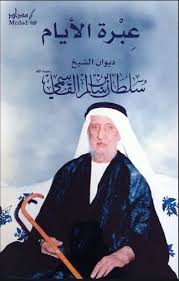
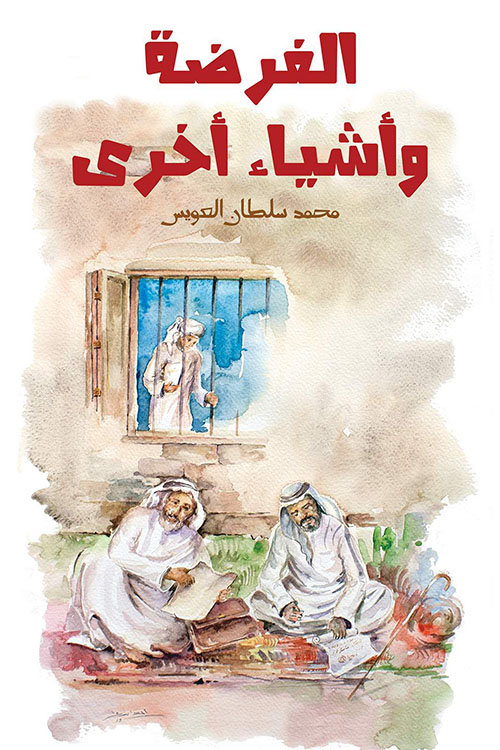
The poetry of Sheikh Sultan bin Salem Al Qasimi was a directed speech, a documented history, a drawing with words, pure emotion, and mature thought. His poetry was visions of light and a lamp in a niche. It deserves to be read, studied, and followed, especially since it depicts an era in which reading and writing became scarce.
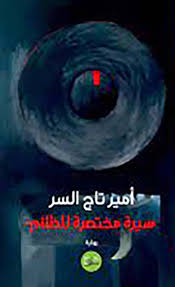
A brief biography of Darkness:
A novel in which the Sudanese novelist Amir Taj Al-Sir talks about a person by profession (a blacksmith) who became a Minister of Culture and how his life changed from a simple person to a minister. He also recounts the important events that he witnessed in many interesting and funny anecdotes and situations.
Success is not luck:
For those who want to break the cycle of illusion about themselves and search for a mission for themselves on earth that they can leave behind before they leave it.
This book carries for you new feelings of determination that were placed throughout the entire earth and had an imprint that bears witness to its existence among human beings, so that you may be among that successful chain that creates a wonderful life and loves the unique achievement in life. I offer this book to everyone who searches for the identity of success and wants To have an impact in this world and the hereafter, so that he is accepted by God Almighty and by His creation, satisfied with his Lord and his Lord is satisfied with him, loved among his family and loved ones, and accepted in his community, his life has a meaning, he has a cause, and he has a principle.
Khalifa Al Mahrezi......
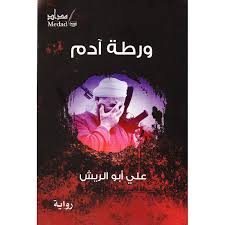
Adam rubs his old rust with the blade of a knife. He scratches the space with tremendous instinctive force. After a period of time has passed since the absence of a second person, the open space has become grayer, and different from what Adam imagined. Here he walks alone, but the old noise still haunts him. A mythical being lives under his skin, making him rub his hands and rub them. His eyelids, he wants to see the light hitting the body of the night with the blade of the knife, and the knife does not seem bold when faced with the thickness of the bohemian bellows that strikes it.
Adam declares, the wires extending from under the neck to the edge of the shoulder are swollen, his face appears congested with blood and the red color invades his place. Adam is now thinking about the crow that hovers around his head, crowing with a sound like the horn of an old freight vehicle. He had previously been told that seeing a crow in the belly of the sky is an omen. It was ominous, so his senses trembled and he turned to the notebooks of the past, and questions abounded in his head.
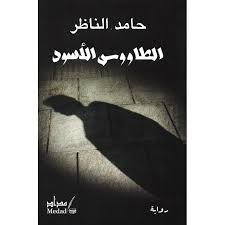
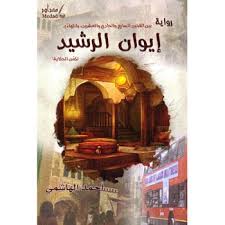
Black peacock:
A novel centered around the methods used by political organizations, particularly ideology, to create their individuals who are assigned special roles and at planned times. The social and psychological conditions that the main character in the story goes through are exploited and employed skillfully by the organization to perform their roles efficiently in the future.
The black peacock is a very complex human condition. It appears within the text with different masks and at multiple stages of time. According to this condition, its owner is forced to wear masks that suit every stage of his life and are consistent with the role assigned to him within a long path that was mapped out in advance while he was still young. The novel presents its mysterious main character in two parallel narrative lines, once in the mirrors of others and again in an internal monologue of the same character as she struggles with death on the surface of the river.
The story begins with the story of the mysterious advisor Taj al-Din, one of the leaders of the Islamic movement and one of the mysterious influencers in government, and his strange, transforming personality, with many confusing masks, to delve into the details of a long period of modern Sudan’s life extending from the seventies of the last century, from the years of Nimeiry’s rule and extending To the beginning of the new century, filled with many events that changed the course of political events in the country.
The name of the novel is taken from an adjective given to its secret hero, Adam, when he was thirteen years old when he was serving his sentence in a juvenile facility for killing his mother, her husband, and their son. At this stage, the organization pays attention to Adam's personality and his tendency to violence, and is preparing for the years in which Islamists will rule the country. The novel presents the main character from two angles: as a perpetrator who trapped many victims, and as a victim who was deceived and fell into the trap of violence.
Adam is transformed by the game of masks into Ammar Al-Barakas, Shaker, Taj Al-Din, and many other names. Thanks to it, and thanks to his deep culture and exceptional abilities, he became one of the arms of violence that the authorities exploited to discipline their opponents during the third democracy period, which lasted between the years 1986-1989, and then used it in its multiple wars in South Sudan. And Darfur, which the alleged advisor himself admitted in his narration of his memories in a personal monologue during his struggle with death.
The novel begins with the scene of the enigmatic and enigmatic man (Taj al-Din) moving to the Burri neighborhood, located east of the capital, Khartoum, close to the shore of the Blue Nile, where he kept his distance from his neighbors until the moment his death was announced in the plane accident, without any reference to his name among the missing. The question mark over the man's fate haunted the imagination of his chance neighbor and former companion during his university days, Judge Al-Naim Darraj. He is provoked by the story of the man who wore different masks, so he travels the country in search of the turning point in the path of the mysterious man before he solves all the mysteries in the end.
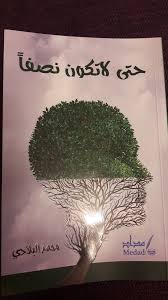
this book ...
Multiple positive values speak of the flame of success and excellence that exists within every human being... But we want someone to awaken it with initiative, high determination, and courageous hard work, while there are those who extinguish it with arguments, procrastination, and lethargy while waiting for luck.
This book shows that success does not come to the inactive, and life does not accept half-life, so do not live a half-life, do not choose half-solutions, and do not cling to half-hopes.
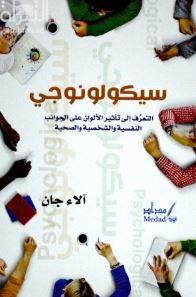
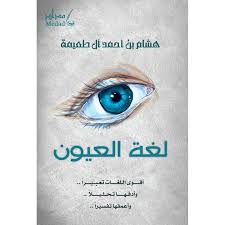
This book is nothing but a summary of several sciences and courses in my specialty (psychology), as I mixed the sciences of psychology, feng shui, and colors with general culture, and I derived the idea of the book and its unique name, “Psychology,” which combined the psychology of colors into one new, concise word.
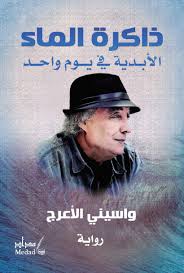
Water memory:
It is considered a personal biography of the great Algerian novelist (Wassini Al-Araj), in which he talks about the control of armed terrorist groups at that time over all aspects of life in his country, and how he suffered because of that, being estranged from his family and hiding so that he would not be killed.
The human personality is one of the first priorities in the field of psychology in its various sections and directions, according to the studies reported in this field, as it reveals to us the truth about the secrets and mysteries of the human psyche. Moreover, it is responsible for the formation of the individual’s human self, and through it it also shows us traits and behaviors. The morals of this person express what is on his mind.
There are many important personalities in our daily lives, such as (father - mother - brother - sister - husband - wife - friendly neighbor - work colleague...etc.), as each of these personalities carries in his personality characteristics that distinguish him from others. Other people, so we must be familiar with the correct way to deal with these various personalities by learning the truth about their characteristics, behaviors, and ethics, as this contributes greatly to knowing how to coexist and adapt to them.
Trip to Japan:
A book in which Emirati writer Jawaher Al Muhairi interviews the creative and well-known personality in the United Arab Emirates (Mansour Al-Japanese), in which he talks about the differences between the Japanese and Emirati people and the common customs and traditions. It also embodies life in Japan, including the joy of living and funny anecdotes.
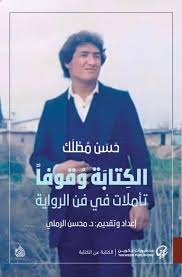
Writing while standing:
It is considered the last book by the late novelist Hassan Mutlaq, the author of the novel (Dabada), in which he talks about the philosophy of writing and the novel. It also embodies his reflections on awareness and perception, which he used to employ in the book and the novel. It is a book that prompts us to ask here: What are prose books? Why do we write? Who is the real writer? What is the point of literary writing? Who is the reader and what is reading? .
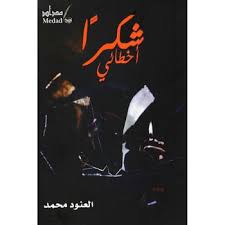
I decided here to write about my weakness, my strength, my surrender, my fear, my courage, my will, and life. I decided to challenge myself, between those letters, to write about my experiences, my failure, my mistakes, to ask myself a lot about all of that, about every reason that destroys me, and about every reason that makes me stronger. .
Here in this book you will find me advising myself one day, surrendering another day, accepting and satisfied, and angry and dissatisfied with everything at other times.
You will find among all of this a question that I researched in my experiences in order to answer it. I do not have the answer to it because your experience is different from my experience. Read my answer and search for your answer.
I write here because I care about me, I write here because I care about you.
When you decide to surrender, you must also decide not to, and when you decide not to, you must face some weakness until you find the strength within you.
I hope you find what you are looking for here, and I find what I want from writing.
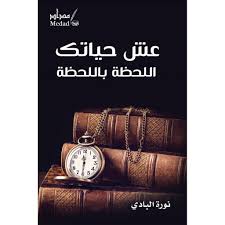
Live your life moment by moment with all its details and enjoy it.. and give it time.. and never rush so as not to regret it.. life is short.. and if time passes, it will never return and will not be repeated..
I wrote the ideas I wanted to convey...what I wanted to reveal...this is a revelation...displacing talk from a heart full of goodness and burdened with silence...perhaps I did not follow the method in which books are written...because...oh dear reader...oh human being. Whether you are male or female, I did not write for someone to evaluate me and to gain appreciation from some and criticism from others, while being prepared to accept and welcome it if it is constructive, honest, and purposeful.
But I am writing to dialogue with you.. to exchange with you.. to chat together.. respond to me as you read.. talk to me.. address me.. I hear you, understand you, and listen to you.. object.. disagree.. and agree.. make me a person close to you.. a friend. Dear to your heart... and do not judge me... leave the judgment to the Creator of the universe... respect my difference from you... and accept my belonging to my human, cultural and intellectual identity... and remember that we are all from Adam... and Adam is from dust.
I promise to respect and appreciate you and thank you for choosing my book and adding it to your precious list. Take care of it and put it in a warm and beautiful place.
Thanks ..