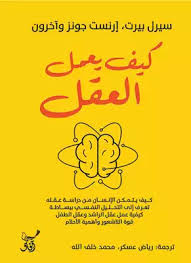
يتميز هذا الإصدار برؤية أعمق لمفاهيم لغة الجسد، حيث إنه يحيك النسيج الكامل للخبرة التي تمتلكها الخبيرتان من خلال تجربتهما القائمة على تفسير وقراءة الآخرين، ...
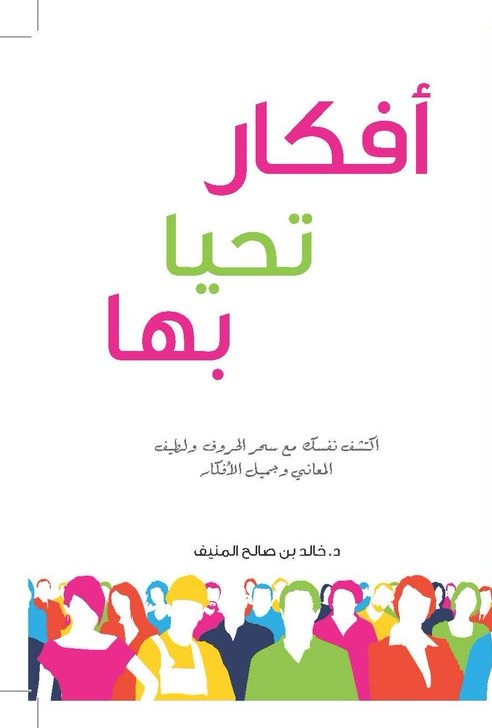
In this book, I collected some of them to put them in your hands... because what happened to me or to one of the heroes of these thoughts also happened to you in one way or another...
Laughter, happiness, optimism, sadness and tears..
These feelings will touch you within the folds of this book, and you will see a reflection of a feeling
We have always thought about it, but we have not been able to express it in the form of words that ears can hear.
Her refuge was these papers so that hearts could see them before eyes.
There are happy endings, some are sad, and some of them I leave the pen to you to create an ending inspired by your own imagination.
You are also the hero of a story that you live and you are free to choose an ending that suits you
A social situation that the young people were fed up with... or a strange behavior that appeared among them...
Perhaps a feeling that has stood in the way of our lives... Bells ringing the holes of attention, waving at us with an icy hand...
Either it will dissolve before we notice it, or we will dissolve before we understand its purpose.
Here we stop and give it our minds... for you and perhaps for those after you
دومًا ننتظر شخصًا ما.. نظن أن بوجوده تتبدّد كافة أوجاعنا ويغمرنا السلام، ونتوهّم أننا حينها سنشعر بالاكتمال! وتصفعنا الحقيقة أن ذاك الشخص الذي رأينا فيه المنقذ.. ربما هو من يمنحنا خيبتنا الكبرى.. وبدلًا من أن نُزهِر بجواره.. قد نذبل.. وننزوي.. ونتلاشى.. ونذوب
National values and culture of coexistence:
The most precious thing in our existence is the homeland to which we belong, and it has rights required of us by common sense, and confirmed by religious texts, and it is necessary that we take note of these contents because of their impact on the behavior of citizens and residents under national states.
What are the rights of the homeland and the citizen in contemporary national states?
What are the implications?
What are the national values that a citizen should have to achieve national security and peaceful coexistence among the people of the country?
Between heart and mind:
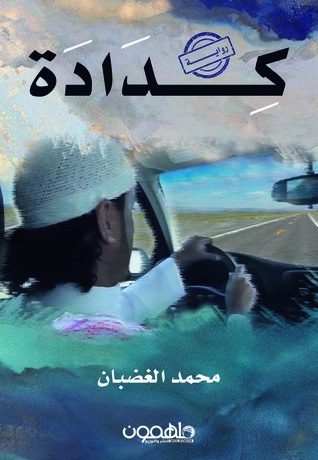
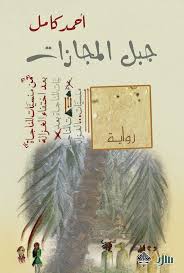
It is a novel that tells the experience of a failed love, which was ultimately a lesson for its owner. Ahmed lived his entire life under the robes of his conservative family, and spent many years dreaming of marrying his cousin Hessa, whose love had grown in his heart since their childhood. He was a passionate lover, but his family’s financial conditions were difficult. And conservative traditions surrounded him from every side like a bracelet surrounds the wrist, and despite his sincere love for Hessa, who shyly exchanged his feelings of love for him, he was unable to unleash her feminine feelings in his lover, who fell in love with a chaotic man with a strong personality to the point of indifference, and when She leaves him and moves on, leaving him heartbroken and desperate, suffering from depression, from which he cannot recover except when he takes revenge on the man who loved her for a man from whom that shock made another human being, after she taught him the lesson of his life.
About the book
The book is divided into six chapters. The first chapter talks about the religious reform movement in Europe and the emergence of the United States of America and its role in serving Zionism in Palestine and transferring its project from the settlement stage to the state stage. It examines the roots of the relationship between America and Israel and the religious dimension, which is the basis of the strength and durability of American relations. Israeli
In the second chapter, the book talks about the October War - the year 1973 AD - which ended with the victory of the Arabs (and the destruction of the myth of the invincible Israeli army) constituted a turning point that transferred the Arab-Israeli conflict into a third world war, and made the Arab-Israeli conflict turn into a conflict of existence that is not For Israel and even the existence of the entire Arab nation, it also opened the door to reviving old ideas calling for the division and fragmentation of the Arab region, and opened the appetite of writers and thinkers to compete to present visions on this matter, such as Bernard Lewis.
The third chapter examines changing the position of the Arab/Israeli conflict from a priority to a secondary conflict, by working on the multiplicity of conflicts in the region and playing the sectarian card, which led to the disappearance of the Arab/Israeli conflict, which was on the hierarchy of priorities, among the winds of new conflicts in the region.
The fourth chapter of the book is the real beginning of transferring the ideas and plans aimed at fragmenting the region, which were formulated and officially approved after the October War, to the stage of implementation on the ground. The beginning - in the year 2003 AD - was with the aggression against Iraq, which came at times under the pretext of weapons of mass destruction, a lie formulated by the United States. Sometimes under the pretext of spreading democracy
The fifth chapter of the book talks about the soft power that the United States sought to employ to complete the plan to fragment the Arab region, which was known as the Arab Spring revolutions, which are a reproduction of the model of the colored revolutions in Central Asia. This chapter examines the relationship between the United States and the Muslim Brotherhood, and it was limited to Egypt and Syria. Because of the strategic position that these two countries enjoy in the Arab system,
Chapter Six of the book touched on ISIS and the roots of the relationship between the United States and extremist fundamentalism, the impact of the Arab Spring phase on the recovery of this organization, which is an extension of Al-Qaeda, and how the United States found in ISIS what it needed to complete the plan of creative chaos after the fall of the political Islam groups that came to power during the Arab Spring phase.