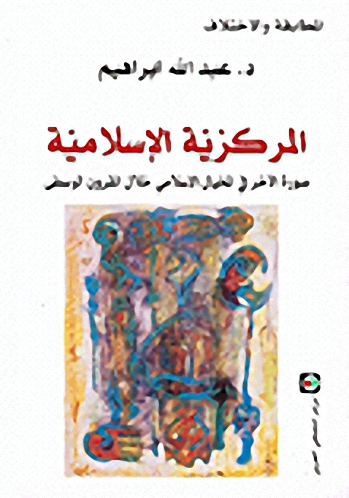
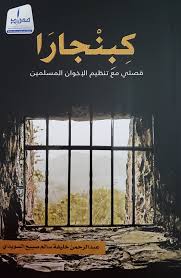
Kabanjara..... Now... after I presented the important moments that I experienced, which made me a stranger in the heart of my beloved country, a stranger in its thoughts and feelings For his loyalty, I thank God who enabled me to regain my strength to gather what was left of that citizen who grew up on the land of a homeland that did not deprive him of anything. My loyalty to my homeland will not be complete without clarifying some of the facts of the Brotherhood organization, so that its false masks fall between the covers of this book. Writer ...
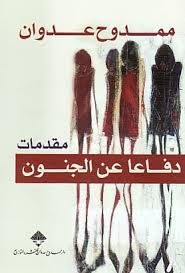
Man had a beautiful dream about himself, and he aspired to transcend his human condition, but a succession of circumstances opened a wound in this dream. The dream began to bleed and fade away. As it atrophied, it began to take on forms and names. From time to time, a person became aware of his tragic loss and realized that he was working hard to prevent himself from descending from his human level to the level of an animal, and when he resisted, his resistance took on a form of madness, and in this book an attempt is made to touch upon something of... This bleeding is particularly within the context of creative expression. Perhaps these (introductions) could be an (introduction) to a more comprehensive research, or research, but we are currently in the stage of defending our right to insanity.
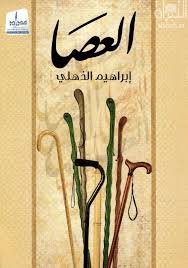
Contemplating the stick creates the impression that it does not mean anything. It is just a whip, thin or thick, depending on the personality and mission of the one carrying it. It may be made of bamboo, the limbs of a tamarisk or brown tree, or anything. It may be expensive, and a person may pick it from the ground. At no cost. But these things that do not mean anything carry meanings, and conjuring up the image of their presence among others may indicate to you that they are very important, and that they are everything to us here. In black Africa, in Australia, and among the inhabitants of the Alps, it is carried by the old, the young, and the elders of the people, and in the hands of the guard and the shepherd, and it is used by the cleric, as well as the magician and the sorcerer, and you find it solid in the military, moved by the music melody of the maestro, and in all parts of the world it is present, and in every tenses
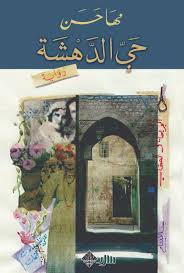
“Amazing is a hidden treasure in Aleppo,” says one of the novel’s heroines. In her work, Maha Hassan tries to bring this amazement through writing and memories to re-draw Aleppo and its ancient popular neighborhoods, its rituals of living, the simplicity of its people, and their small dreams, before the war comes and destroys all of this in its path.
Relying on a unique technique inspired by the names of Arab and international novels and the titles of the chapters, the heroes of “The Amazing Neighborhood” tell us their story from “Zarqa’s Imagination” and “Beirut Nightmares” to the house of “Sleeping Beauties.”
It is a story about love, childhood memories, intentional killing, the emotional placenta, and the role of literature in our lives






/ ( مملكة البحور السبعة )-1718251822.jpg)