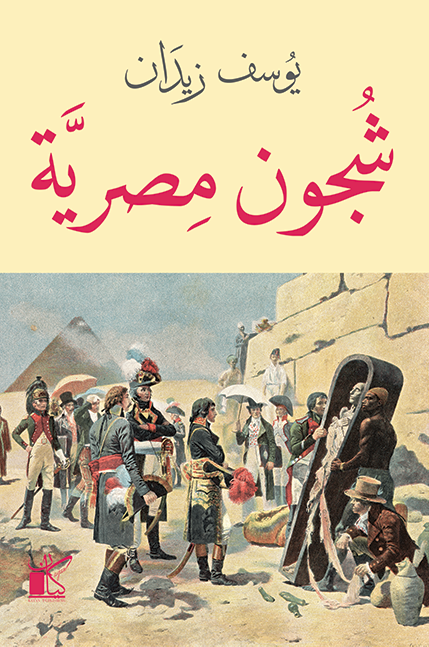
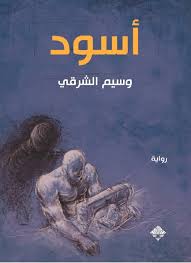
Qasim, a lost young man, is forced to assume identities he did not choose, and always pays the price for mistakes he did not commit. But he finds an escape from his life and circumstances when the doctor, Ramzi Al-Nawawi, suggests that he travel with him to the country of the leader, “Big Boss,” to perform a mummification operation on the leader’s young daughter, who died under mysterious circumstances.
Their arrival is accompanied by a mysterious epidemic spreading in the country that only attacks girls. Ramzi finds his opportunity to propose a project to “decorate” the deceased women, and he is soon faced with accusations and accusations. However, Qasim, who is drawn after the doctor like a bewitched person, and under his illusion, is unable to confirm the truth of what is being said, nor to deny it. Does the doctor really have anything to do with the epidemic?
This time, breaking into a new world, Maryse Conde leads us from one mystery to another, in a breathless plot that strangely combines issues of identity, race, and religion, to tell us about the “flowers of darkness,” whom Ramsay believes are the only ones worthy of desire.
Khaled is a young man in his thirties who graduated from the College of Fine Arts. He failed to travel from his city of “fairies,” which was closing in on him from all sides, so he had no choice but to work as an employee in a bookstore, through which he practiced an additional, secret job in which he sold his works of fiction. Life would have gone better if one could keep the secret, but as Faraj, Khaled’s father, says: “No matter how much you hide it, the secret will wake up inside you one day, and then it will continue to burrow into your soul until it is released to the world.” Thus, Khaled’s choices in life soon put him in the face of “Khalil Nayef,” a lawyer with wide influence who wants to enter the world of writing.
Within a suspenseful context and a rapid pace, Tamim Heneidi dives into the scenes of the relationships between writers, publishers, and bookstore owners, and sheds light on the way in which culture may be used to polish the image of the political class created by the war. But can books perform a task like this?
A fictional story inspired by history, about a Roman princess named Octa Via. She does not possess beauty, but she possesses extreme intelligence, erudition and great wisdom, which made her believe that she was able to overcome the competition of the most beautiful women in winning the heart of whoever she wanted and everything she wanted... So can she? achieve this?