With every meter that Rudy passed, his resistance to the influence of the fortune teller’s words became more intense, but at the same time, the fortune teller’s words became more deeply rooted in his soul and mind. Although he did not admit it, the fortune teller's words had completely controlled him. “Indeed, what knowledge do we, the inhabitants of this vile grain of dust called the Earth, claim to say, ‘This is possible and this is not possible?’ If we were merely irrational beings, we would say that we were created as a result of certain interactions between different chemical elements, such as mushrooms, algae, and others. But where does the soul come from and where does it go?” Do you go? And the mind and feelings? It is impossible for a bone or muscle in my body to feel love or hatred or to think and make a decision. All of this is carried by an energy that resides in my body, an energy that is stronger and bigger than me. It does not even reveal to me who it is or what it is made of I am just a dead battery for this energy, what a worthless piece of junk I am, but why should I accept that the fortune teller’s words are true? He, too, is just a piece of junk like me! These thoughts were fighting inside Rudy, and he did not know which idea was victorious over the other
No temporary address:
The book carries a sublime message that a young woman wanted to convey, despite her young age. However, life has taught her enough lessons to make her decades ahead of those of her age. The book is a bridge between the writer’s heart and the hearts of the people, so that she can express through it the “lesson” that makes us obsolete about the existence of a person. He guides us to it, and it is enough for us that words are able to console us and paint a picture of happiness in our hearts.
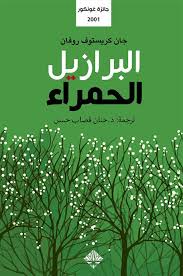
The most amazing thing about this story is that it is true! Not only because of the strangeness of its events, as the Renaissance era is rich in wondrous adventures, but the reason for its strangeness is the almost complete forgetting of it.
The two orphan children: Ghost and Columb are deceived; To participate in a colonial mission to explore the new world, as it is their only hope of meeting their father, the disappeared knight. This forgotten expedition is led by Philoganion, a warrior returning from the Crusades, bringing with him a diverse team of soldiers, workers, engineers, as well as an unprecedented element; Children of orphan age, the age that allows them to learn new languages quickly enough; To work as translators with the indigenous people.
On one of the most mysterious and exciting French campaigns of the Renaissance, and through the story of two orphans searching for hope and the human struggles they go through, in his book, which won the Goncourt Prize, Ruffin takes us on a captivating historical journey from the shores of France at the beginning of the era of religious unrest to Brazil with its red woods. To describe to us man's struggle with nature, and the first encounter between different civilizations, with the curiosity, fear, admiration, and passion it carries.