يحتوي هذا الكتاب على ٧ دراسات وأبحاث مالية يمكن تطبيقها في حياتك يوميًا، تساعدك على تغيير حياتك بالكامل وتبدأ في الانطلاق نحو الاستقرار المالي والتحرر من القيود، وكذلك التوقف عن مقارنة نفسك بالآخرين. .
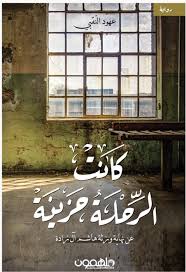
Fire novel
(Al-Murr) is a ten-year-old boy who lost his strict father. He became happy. Then his mother and siblings died in a fire on the night of his birthday. He became sad. He lived with his uncle and his family. He did not receive love. Everyone compared him to his father, so he became very angry. He was rebellious and cruel. He managed his father's company, he has a close friend, and a person named "Baba Murad", who was a friend of his father, and played a major role in his upbringing and upbringing.
Murr's past and memories affected his life. He suffered from panic attacks, did not allow others to enter his life, and feared love and loss. He set strict laws and restrictions for himself that he does not violate and does not allow others to violate.
His life began to change when Dima (his cousin, who returned from abroad with her family) entered his life.
The book addresses some of the financial issues prevalent in our society in a short collection of true stories to educate and educate individuals. It begins with a conflict between “reason” and “society” over the group of creditors drowning in a swamp of debt, where “society” ignores the circumstances of that group while “reason” goes on a short trip to find out their stories and what their circumstances are, then offers solutions to the creditors, and benefits from the experiences of those who survived them in order to prove Society has the idea that these individuals are capable of change and emerge from the darkness of debt into the light of success, eventually calling them “reasonable spendthrifts.”
هُنا ١١ قصة استثتائية مُلهمة، وسيَّر أُناس داعمين مؤثرين في رسالات الأنبياء وحياتهم. كتابُ غاية في الأهمية يجعلنا نُدرك الحجم الحقيقي والقيمة الفريدة للعائلة وما تَعنيه صلة القرابة منذُ نشأة هذا العالم وحتى الآن
In 1920, the British philosopher, logician, and mathematician Bertrand Russell traveled on a short visit to Russia, a trip that brought him a lot of frustration, and later made him one of the most prominent critics of Bolshevism, or the “Russian experiment in communism,” without this meaning that he abandoned his support for socialism as an idea. Or a political approach.
In the first section of this book, Russell records his direct impressions of that visit, in the form of journalistic observations carried out by a committed leftist and first-class philosopher. While the second theoretical and philosophical section is devoted to presenting his main criticisms of Marxism and Bolshevism. Such as criticizing the Marxist philosophy of history, the psychological motives that drive man according to Marx, criticizing the Bolshevik vision of democracy, and refusing to repeat the Bolshevik experience in the West.
Russell presents his ideas to the average reader in a smooth manner without this meaning that he abandons the depth of treatment. Russell's experience and his relationship with a revolution he believed in and witnessed its failure may inspire many. Because it teaches them that changing the world for the better comes through honesty and criticism, and through learning from mistakes, and understanding those who committed them with idealism and courage.