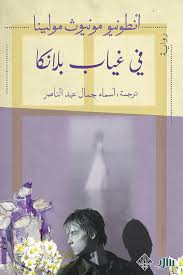
Mario, the geometric painter, returns one day to his apartment in the city of Jaén, which he has shared for six years with his wife, Blanca. He finds that another woman, almost identical in features and gestures, has taken her place. He begins to turn over the memories and scrutinize the evidence, trying to discover the reasons for her absence, or to bring her back again. Somehow. Is Blanca really gone? What do you look for in the worlds you are immersed in and Mario is forbidden from entering?
In this intense and interesting novel, the Spanish writer Antonio Muñoz Molina delves deeply into the relationship of a man and a woman whose destinies intersected before their world began to shake under the influence of differences and the monotony of life. Molina sheds light on the complexity of emotional relationships and the conflicts experienced by couples who love in their partners today what they may hate in them tomorrow...
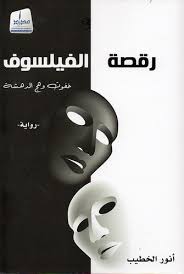
The hero of the novel “The Philosopher’s Dance” is a controversial strategic thinker. He worked and still is an advisor to an Arab leader. He took up his job after leaving Palestine on the run after he was accused of dealing with the enemy during wartime, namely Hezbollah.
This thinker or philosopher practiced political dancing. He theorizes democracy and secularism while working for a non-democratic, non-secular leader who supports extremism. He also believes in Arab nationalism and does not recognize Palestinian nationalism. He engages in a sexual relationship with his Israeli colleague (Tzipora), then continues the matter and justifies his actions. He describes it as resistance. He claims his love for his wife, Layal, and at the same time he lives with a Moroccan woman of Jewish origin during his stay in Britain. This woman plays a major role in the novel as a visual artist and has the ability to listen and remain silent.
The philosopher moves to reside in Britain and discovers an attempt to assassinate him by a Druze soldier who was working in the Israeli army. Here the novel sheds light on the reality of the Druze, accusing them and trying to do justice to them at the same time. The credit for thwarting the assassination goes to a man from southern Lebanon who runs a restaurant in London.
The philosopher receives a letter from a deported Palestinian who took refuge in Lebanon, asking him at the end: How do you feel in your homeland? The message affects him greatly, and he searches for the answer whenever he has the opportunity, and there are many opportunities, but he fails to answer. The question forms a basic pillar of the novel as well.
Although the novel is realistic, it does not follow an ascending ladder of events, and what lies within it is much greater than the events mentioned. The novel, as much as it is a novel of events and actions, is an intellectual novel, and here lies the difficulty of talking about it.
Electrolytes and resources:
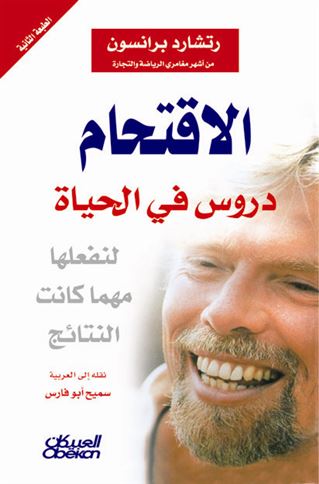
It is a variety of study subjects in the school of life. It has no time or place, no chapter or book.
It is available to every person, and every day it contains more than one exam, and its materials have not been subjected to planning or preparation, and it has no curriculum.
It comes and goes, disappears and settles, changes and is renewed... This is how its materials are as I experienced them.
Resources are study materials imposed by life experience and written by life experience, and life remains the mother of schools.
الدروس المستفادة من الرابحين في الحياة الواقعية من خلال مجموعة من الرابحين في الحياة الواقعية من خلال مجموعة من الضوابط، ويظهر كيف فعلوها ووصلوا الى القمة، ويزودك بالأدوات اللازمة لفعل الشيىء نفسه