Owned houses and others are rented, fleeting and temporary dwellings, between which the writer moves across different Syrian cities, turning the houses into stations, or rest stops that allow her to contemplate the context of her life, her choices, and the source of her desire to remain between closed doors. The subjective nature of the book turns it into a kind of personal testimony, but Nour Abu Farraj is betting that her memories may intersect to a large degree with the experiences of middle-class young men and women from the 1980s generation in Syria, who lived a relatively stable life, before the war came and made a difference in their context. Forcibly expel them from their safe spaces.
In the face of the transience and uncertainty that war brings, description becomes a tribute to the fleeting; This is why the book tries to remind readers of the long time it takes to build a house, in the symbolic or structural sense, but it nonetheless warns them against becoming captives to the place, and encourages them to carry their homes as souvenirs, or small luggage on their long journey.
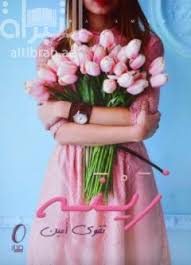
"A crisis of honor":
A cry in the face of the violation of childhood... and a novel that discusses a social issue that has been ignored... that eats away at the bones of children in many homes... until it kills their innocent souls while they are still in the cradle...
“Crisis of Honor” addresses the issue of physical abuse and rape of children. It lifts the veil from the faces of the perpetrators, who are often the closest people to the abused children. It sheds light on the distorted family relationships that cut off the lines of communication between parents and children. It further complicates the problem.
It also addresses the harassment that girls are exposed to in any society, and the impact of physical harassment on her life, her future, and her social relationships.
It is a novel written in the language of the era... painful... the sound of moaning emanates from between its lines... suspenseful until the last line... it brings together bouquets of love, hate, betrayal, and various psychological conflicts... and it tells a story from every line... as you feel at a certain moment as if you know.” "Laila"... and you wish you could go back in time to get to know "Hamdan"... and "Jihad"'s madness reminds you of one of your friends... and the calmness of "Saif" provoking your forty-year-old relative.. and at some point you would like to pounce on "Akram"... or participate." “Celine” is one of her women’s morning stories... She also wishes she could read psychology encyclopedias so she could explain the character of “Abu Masoud”..
“A Crisis of Honor”... a message of awareness for every reader to open his eyes well to protect his children after “Obaida” left in the blink of an eye.. and a warning to every father and mother to reconsider their calculations again.. and not to give trust to anyone with regard to their children.. they are a trust that cannot be It can be recovered easily after being lost or neglected..!!
About the book
(Features of the heart):
In this book, I convey my thoughts, feelings, and personal experiences in a way that is somewhat vague or explicit at times.
I express this in short, not lengthy lines so that the meanings are conveyed quickly and enjoyable to the reader.
I use imaginative images to express, and sometimes I convey the truth of reality from experiences with full disclosure.
My humble writings are a personal effort and the result of two years or perhaps more, as I found encouragement to publish from a number of writers who read some of what I wrote.
I hope that my dream will come true through you, and I hope you can let me know your opinion about my humble writings, and I welcome your comments
Please accept my thanks and gratitude
my regards ,
Samira Khalifa
Summary of the book of a tweeter on the podium - Talal Al-Faliti A cultural, educational and social book that presents the optimal and positive use of social networking sites by members of society and harnessing their capabilities in serving their countries. The book departed from the traditional style and tautology so that it would not be purely theoretical talk, as the author intended to enhance it with personal experience from his activity and interaction on social networking platforms and realistic situations and events. He discussed in detail what seemed to him to be gains. It also addresses some of the concerns about these sites, especially since some of the users of these sites play roles targeting the security and stability of societies, making it necessary for social media giants to confront hate speech and violence.