Are there really people who lived more than one life?! .. How and when did this happen?! .
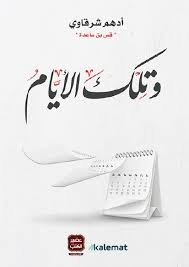
At a time when violence and destruction overwhelm most parts of this planet, and news of murder and disasters tops every news bulletin... and brutal capitalism preoccupies the souls and minds of people, chasing after their own interests, and the number of the world’s wealthy people who have reached an unprecedented level in collecting money is increasing. In the midst of all this materialism and excessive selfishness, there are shining lights of humanity that go in the completely opposite direction. They are a different category of people, people who have dedicated themselves to giving, goodness, and charity, providing great services to humanity at the expense of their time and their own interests. People who still live among us after they were destined to live in the lives of those who came after them. People who were immortalized in history because they were high models of sincere giving to their communities and nations. They provided this universe with great services, values, and deeds that engraved their names on the corners of this planet that would not have lived, progressed, or arrived. It would not have been possible today if it were not for the gifts and services of the great prophets, messengers, scholars, and reformers, and even some simple people whose names have fallen from the pages of history, but they never fell from the comfort that settled their souls, the happiness that filled their souls, and the other lives they lived among those who came after them and benefited from their giving.
Yes... it is giving... that great human value that immortalized everyone who was attached to it and devoted to it... and gave to everyone who gave it.
All we hope for from this book is that it will be a source of inspiration for you to give in any form, at any size, and at any time, to join the club of great giving people. We also hope that the book in itself will be a simple gift from the author. It contributes to enhancing this great human value in our Arab societies, and is a very small step towards developing and improving life, and reconstructing this planet that the Great Creator has appointed us as successors in, and commanded us to strive to reconstruct.
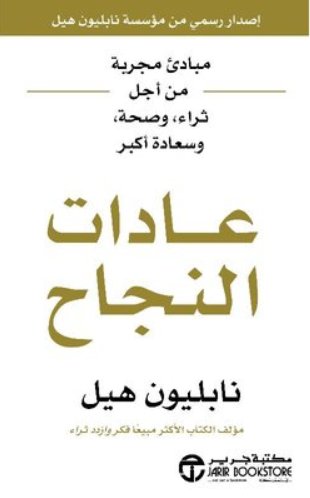
في “فكر وازدد ثراء”، يشدد نابليون هيل على أهمية التخطيط المنظم كأحد العناصر الحيوية للنجاح والثراء. يعتقد هيل أن القيام بخطة عملية ومتوازنة لتحقيق الأهداف الخاصة بك ليس فقط مفيدًا، بل أيضًا ضروريًا. تتطلب عملية التخطيط المنظم تحديد الأهداف بوضوح، ثم وضع خطة مفصلة توضح كيفية تحقيق هذه الأهداف.
Synopsis of Flynn's novel, Willow Roots
Flynn, the revolutionary slave, was born in the city of Khartoum during the Turkish era, bound by the ownership of slavery that he inherited from his parents, who were owned by the wealthy merchant Abu Al-Saud Agha. At the age of nine, his master's daughter, Khairiya, surprised him with a warm kiss. From his high balcony, his master watched the romantic scene, so he decided to teach his boy a lesson that he would never forget. He inspired Flynn's mother to prepare him for circumcision, so he castrated him. The eunuch slave grew soft in his master’s house, and the tragedy grew with him. He met Sisbana, the beautiful slave girl, the illegitimate daughter of his master Abu Al-Saud. Where a strong emotional relationship developed between them, it was like warm rain falling on a smooth rock. On his first romantic date, ugliness is revealed. Spiritual love, which transcends the desires of the flesh, triumphs when Sisbana clings to her love for Finn. Flynn decided to avenge his honor from those who had caused his misery (his master, Abu Al-Saud Agha, Al-Hakim Pasha, Mazhar Farhat, and Abdul-Khair, the slave owned by the Jewish merchant Isaac Levy). In a moment of sincere spiritual love, Sisbana inspired him to join the Mahdi armies that besieged Khartoum. With Sesbana's help, Flynn succeeds in escaping Khartoum and joins the rebel armies. There he met Sheikh Musa Abu Hajal, who refined his soul. Coincidence brings him together with his first prey, Abdul Khair, only to discover that he, like him, was a victim of the whims of his master, the gay Jewish merchant. Flynn enters the city of Khartoum with the revolutionaries to clear part of the debt stuck on the neck of Al-Hakim Pasha Mazhar Farhat in the hospital, where he meets his friend Morgan, who was falsely accused of killing General Gordon. But he fails to reach his love, Sisbana, and his arch rival, his master Abu Al-Saud, who fled to the city of Berber in northern Sudan. Flynn decides to join Prince Abdul Hamman Al-Nujoumi's brigade, heading north to chase Gordon's rescue campaign, which has reached the outskirts of the city of Berber. Sesbana falls into captivity and is taken in by the prince's lieutenant. She moves to live with him in the city of Omdurman, where she gives birth to a son whom she names Flynn out of love for her. Coincidence created Flynn at that moment and in the same place. After redeeming his religion from Abu Al-Saud, from among the willow bushes, Flynn witnessed the tragic scene clearly. The wooden boat is a burning mass of flame. Burnt bodies floated on the surface. A group of British soldiers boarded the boat. The child greeted them with two index fingers pointed at their chests. And immortal phrases (Boom, boom, die, die) like bullets that pierced their hearts. Flynn watched them pull the child out of the burning rubble. The looks exchanged between the thick smoke between Flynn and the child are like stray arrows that two lovers exchange, penetrating their hearts, exploding into a ball full of sincere sentimental feelings. A magnetic aura of attractive sensations and feelings fixed deep within the human soul with the pegs of human relationships. Flynn fell unconscious from the intensity of the explosion, while the English ship headed north with the young child on board. That scene remained stuck in Flynn’s mind, just as those phrases remained engraved on the wall of the mind of the little boy, Mustafa Wad Barbar (James Francis), like a tattoo of a Negro tribe that will never go away.