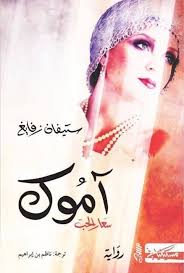
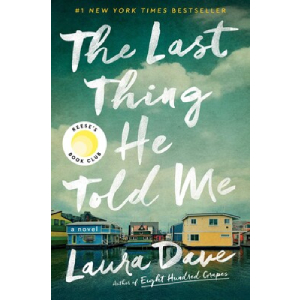
The fuse of war ignites between the Monsalbes and the Barragans, a fierce war governed by only one law: blood for blood. As the two families seek to accumulate wealth through illicit activities, love with its presence creates deeds, changes paths, and creates mountains of words that people pass on about the members of the two families until they are no longer what they are, but rather what people tell and imagine. Thus begins the legend that became true from too much of it being passed on, or perhaps it is a true story that became a legend from too much of it being told.
With an interwoven narrative full of sensory details, drawing from the springs of magical realism, Laura Restrepo writes a novel that is brutal and sweet at the same time, an epic story about desire and betrayal, a myth about life and death crouching in the desert: “like a leopard in the sun.”
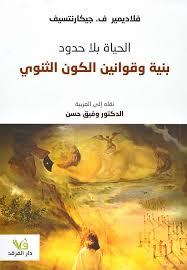
The Freedom Instinct, Essays on Philosophy and Anarchism
40 AED
90 AED
0 Reviews0 sold
Product Details :
Noam Chomsky enjoys great fame in the Arab world, as a writer who works to expose the foreign policies of the United States of America and its allies, and as a linguist who founded the theory of generative grammar. However, Chomsky is also a first-class philosopher; He wrote on political philosophy, epistemology, the philosophy of mathematics, logic, the mind-body problem, and other traditional philosophical topics. We would like to present to the Arab reader a part of Chomsky’s philosophical work, due to its philosophical importance, on the one hand, and its direct connection to our current and pressing questions about the issues of freedom and liberation, cultural specificities, the role of intellectuals in the struggle for liberation, and other topics, on the other hand.
The articles translated here include topics in epistemology, the foundations of science, rationality, the role of intellectuals, and the relationship between philosophical work and political activity, and are united by one main topic: freedom.
We are the generation of war, and our parents are the generation of defeat, and between them souls grew old, and the concepts of war and love became similar to them.
Things are too big to tell, but I believe that a story alone is capable of creating a small homeland that we carry in our pocket, and that we talk about to our children who were born outside the homeland, and who carried its mark on their faces, tongues, and identities without seeing a stone in it. Only a story is sufficient to create the imaginary homeland in their minds alive. .
This collection deals with stories from the lives of women who lived between two rivers. Between Syria and one of the asylum countries, it is concerned with the small details of these two lives, and the effects that the war had on the lives of these women: disappointment, loss, escape, and love.
It is an attempt to overcome the great scene of war, and the frost of the borders creeping as a river of ice between the shoulders, with small details, in which the voice rises and asks: “Yes, I lived between two rivers, but which of them lived in me?”