About the book
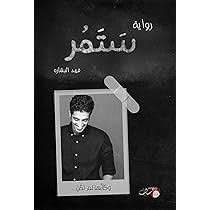
Tyrant's collection is my first published work that includes multiple poems, most of which are emotional poems.
The collection consists of 24 poems, which are as follows:
• Oh my killer
• Closer than around the corner
• Do not take it
• Dimple
• When you are present
• My paths are burdened with distance
• Ground
• The wasteland of remoteness
• Arabic
• A letter about my silence split
• Wait, wait
• My ultimate wish
• Sloppy letters
• Don't worry
• Covenants
• My apologies
• The mother was killed
• Tyrannical
• My one and only love
• Really give up
• Storm
• Love brings calamity
• Crazy jealousy
• Bored
هذا الكتاب المدروس بعناية والمصاغ بشكل جيد يدحض معظم ضجيج الإدارة الحالي؛ من جماعة الرؤساء التنفيذيين الخارقين إلى جماعة المعلومات حتى هوس الاستحواذ والدمج.
من هي ديمة؟ وما هي حكايتها؟ وكيف يمكن لها أن تتعرف على تميم؟ ومـا هي ظروف علاقتها به؟ وما هو دور الذي سيلعبه المحقق آدم في كشف لغز القضية؟ ومـا هي حادثة قمـر دار الأوبـرا؟ هذا ما ستجيب عنه الكاتبة والروائية / فـداء العجمي، في رواية الرعب والخيال / عازف
A girl in her twenties and her father's only daughter with her two brothers
Her father's friend's son falls in love with her, but she ignores and rejects this love.
At the same time, she meets a young man of a different nationality, and they admire each other, but it turns into love on the young man’s part, and fate wants that to happen through a trip to Uzungol, but an accident occurs during the trip, and after that, her feelings towards him change. Events take place after that, and she experiences situations towards the son of her father’s friend, and it becomes clear that he It is her love and her choice.
About the book
The book is divided into six chapters. The first chapter talks about the religious reform movement in Europe and the emergence of the United States of America and its role in serving Zionism in Palestine and transferring its project from the settlement stage to the state stage. It examines the roots of the relationship between America and Israel and the religious dimension, which is the basis of the strength and durability of American relations. Israeli
In the second chapter, the book talks about the October War - the year 1973 AD - which ended with the victory of the Arabs (and the destruction of the myth of the invincible Israeli army) constituted a turning point that transferred the Arab-Israeli conflict into a third world war, and made the Arab-Israeli conflict turn into a conflict of existence that is not For Israel and even the existence of the entire Arab nation, it also opened the door to reviving old ideas calling for the division and fragmentation of the Arab region, and opened the appetite of writers and thinkers to compete to present visions on this matter, such as Bernard Lewis.
The third chapter examines changing the position of the Arab/Israeli conflict from a priority to a secondary conflict, by working on the multiplicity of conflicts in the region and playing the sectarian card, which led to the disappearance of the Arab/Israeli conflict, which was on the hierarchy of priorities, among the winds of new conflicts in the region.
The fourth chapter of the book is the real beginning of transferring the ideas and plans aimed at fragmenting the region, which were formulated and officially approved after the October War, to the stage of implementation on the ground. The beginning - in the year 2003 AD - was with the aggression against Iraq, which came at times under the pretext of weapons of mass destruction, a lie formulated by the United States. Sometimes under the pretext of spreading democracy
The fifth chapter of the book talks about the soft power that the United States sought to employ to complete the plan to fragment the Arab region, which was known as the Arab Spring revolutions, which are a reproduction of the model of the colored revolutions in Central Asia. This chapter examines the relationship between the United States and the Muslim Brotherhood, and it was limited to Egypt and Syria. Because of the strategic position that these two countries enjoy in the Arab system,
Chapter Six of the book touched on ISIS and the roots of the relationship between the United States and extremist fundamentalism, the impact of the Arab Spring phase on the recovery of this organization, which is an extension of Al-Qaeda, and how the United States found in ISIS what it needed to complete the plan of creative chaos after the fall of the political Islam groups that came to power during the Arab Spring phase.