Reader's eye. Eye of the critic. Painter's eye. Photographer's eye. Artist's eye. Journalist's eye. Many other eyes have become part of the dictionary of terms used in this era, and it happens that a person tells himself or others to read a specific text with the eyes of the reader, not the critic, or vice versa.
How many eyes do we have?
Is the eye the first key to receiving, understanding and interpretation? Or is it just an intermediary?
There is no doubt that the interpretation of texts cannot take place without reading them (hearing is a form of reading), and that a text that is not read or heard cannot be interpreted. Therefore, these parties overlap so much that it is impossible to do without one over the other.
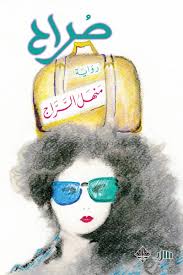
“Sarrah” is an immigrant in Sweden. Since the start of the war in her country, she has been unable to write. She seeks to seize the key to freedom of expression, but she faces locks. She works with an autistic child, whose father, Gibran, works in a library and fights discrimination, but he still finds himself in dark basements.
“Gibran” longs for “Sarrah,” and she longs for writing, remembering her days in Hama, and her ambition to find peace.
In this novel, Manhal Al-Sarraj tells us, in a different style of narration and writing, the story of Syrian immigrants in Sweden, their circumstances, and the fragmentation of their relationships, and quietly scatters reflections on existence, life, trust, love, and peace.







-1718247174.jpeg)

-1718337540.jpeg)