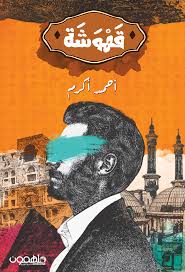
Qaddour’s text takes inspiration from the idea of confession from the text “Death and the Virgin” by the Chilean writer Ariel Dorfman. Without that, the text begins to build its purely Syrian story, which revolves around an old relationship that comes back to life between an officer who was expelled by the ruling regime in peacetime and brought back in war, and “Jalal,” who was tortured in one of the days of peace. Syrian security detention centers, and among a former detainee who was tortured under the hands of the former. The two meet when their destinies intertwine through Jalal's nephew, the theater director concerned with directing the play "Death and the Virgin" in which Akram plays the role of the tortured, while the character of the tortured girl is played by "Haya, Soha Nader", Omar's lover. In the orbit of these relationships, Radwan, Hamza Hamada, the officer’s bodyguard, gets lost without knowing the horrors he will face after leaving the officer’s service to participate in the massacre of the twenty-first century.
this book ....
“Features of the morning... the first of positive values and daily self-development that carry clarity of mind and clarity of thought... in which words came forth that were easy and palatable, deep in meaning and broad in significance, fraught with the blessing of timing... a brief description of a life that has passed, lost and whose promise will come... morning messages that may be gifts of experience.” For those who have not tried yet, and reminder bells for those who have tried and forgotten.”
There are few writers who have chronicled with such honest clarity and such bold honesty the development of the soul through the stages of life. Peter Kamintsend (1904), Damian (1919), Siddhartha (1922), The Steppenwolf (1927), Narcissus and Goldmund (1930), and The Journey to the East (1932) are different versions of a spiritual autobiography, and different depictions of the path of Joan. Each new step refines the image of all previous steps, and each experience opens new worlds of exploration in a continuous effort to communicate the vision.
Hermann Hesse, winner of the Nobel Prize for Literature in 1962, was closely connected to the Indian world. He was influenced by Eastern philosophies. When he was once asked about the most important influences in his life, he said that they were “the Christian and never nationalistic spirit of my parents’ house,” “reading Chinese masterpieces,” and “the personality of the historian Jacob Burckhardt.”