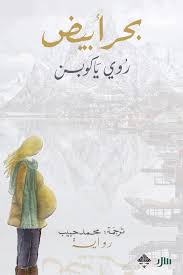
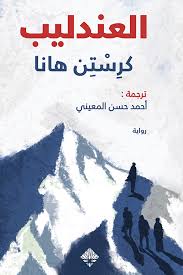
Alone on Baraway Island, Ingrid lives after everyone has left, roaming the ruins, repairing what can be repaired, and catching fish and bodies that wash up on the island's shores. The young woman struggles to hide a big secret that could put her in danger, as the country witnesses the final months of World War II.
In this novel, Roy Jacobsen completes the story of Barawe Island, which began with "The Invisibles", with his delicate narration, natural images, and brief sentences that hide the truest and hottest feelings behind them.
“White Sea” is a novel about new beginnings that make their way from the ashes of a devastating war, about friendships and love, the faces of those passing by and the dead, and about people who remain where they are in the face of war, bidding farewell to the departed and receiving those returning, and monitoring the passing of days and the succession of seasons.
لكي تكون مؤهلاً للإرجاع ، يجب أن يكون العنصر الخاص بك غير مستخدم وفي نفس الحالة التي تلقيتها فيه. يجب أن يكون أيضًا في العبوة الأصلية. تُعفى أنواع عديدة من البضائع ...
It happens that a story creeps into your depths, shaking you violently and challenging you to turn away from it. This is exactly what happened to me with the story of the Nightingale. The truth is that I did everything in my power not to write this novel, but my research into the subject of World War II led me to the story of the young woman who made an escape route from occupied France, and I could not escape from it. Thus, her story became the starting point, and in reality it is a story of heroism, risk, and unbridled courage. I could not distract myself from her; I kept digging, exploring, and reading, until this story led me to other stories that were no less amazing. It was impossible for me to ignore those stories. Thus, I found myself under the weight of one question haunting me, a question that remains as valid today as it was seventy years ago: Under what circumstances would I risk my life as a wife and mother? More importantly, under what circumstances would I risk my child's life to save a stranger? This question occupies a major position in the novel The Nightingale. In love, we discover who we want to be; In war, we discover who we are. Perhaps sometimes we do not want to know what we can do to survive our lives. In war, women's stories have always been ignored and forgotten. Women usually return home from the battlefields, say nothing, and then move on with their lives. The Nightingale is a novel about these women, and the bold choices they made to save their children and maintain the lifestyle they had become accustomed to. Kristen Hannah
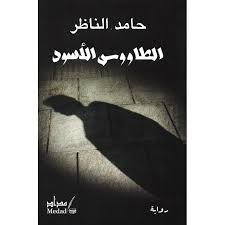
Black peacock:
A novel centered around the methods used by political organizations, particularly ideology, to create their individuals who are assigned special roles and at planned times. The social and psychological conditions that the main character in the story goes through are exploited and employed skillfully by the organization to perform their roles efficiently in the future.
The black peacock is a very complex human condition. It appears within the text with different masks and at multiple stages of time. According to this condition, its owner is forced to wear masks that suit every stage of his life and are consistent with the role assigned to him within a long path that was mapped out in advance while he was still young. The novel presents its mysterious main character in two parallel narrative lines, once in the mirrors of others and again in an internal monologue of the same character as she struggles with death on the surface of the river.
The story begins with the story of the mysterious advisor Taj al-Din, one of the leaders of the Islamic movement and one of the mysterious influencers in government, and his strange, transforming personality, with many confusing masks, to delve into the details of a long period of modern Sudan’s life extending from the seventies of the last century, from the years of Nimeiry’s rule and extending To the beginning of the new century, filled with many events that changed the course of political events in the country.
The name of the novel is taken from an adjective given to its secret hero, Adam, when he was thirteen years old when he was serving his sentence in a juvenile facility for killing his mother, her husband, and their son. At this stage, the organization pays attention to Adam's personality and his tendency to violence, and is preparing for the years in which Islamists will rule the country. The novel presents the main character from two angles: as a perpetrator who trapped many victims, and as a victim who was deceived and fell into the trap of violence.
Adam is transformed by the game of masks into Ammar Al-Barakas, Shaker, Taj Al-Din, and many other names. Thanks to it, and thanks to his deep culture and exceptional abilities, he became one of the arms of violence that the authorities exploited to discipline their opponents during the third democracy period, which lasted between the years 1986-1989, and then used it in its multiple wars in South Sudan. And Darfur, which the alleged advisor himself admitted in his narration of his memories in a personal monologue during his struggle with death.
The novel begins with the scene of the enigmatic and enigmatic man (Taj al-Din) moving to the Burri neighborhood, located east of the capital, Khartoum, close to the shore of the Blue Nile, where he kept his distance from his neighbors until the moment his death was announced in the plane accident, without any reference to his name among the missing. The question mark over the man's fate haunted the imagination of his chance neighbor and former companion during his university days, Judge Al-Naim Darraj. He is provoked by the story of the man who wore different masks, so he travels the country in search of the turning point in the path of the mysterious man before he solves all the mysteries in the end.
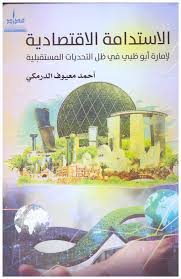
This book deals with anticipating the future of the Emirate of Abu Dhabi through analyzing the past and evaluating the present
And developing a vision for the future, which is done by identifying the different methodologies for dealing with possible scenarios by stating the facts and presenting statistics and the most important problems facing the economy of the Emirate of Abu Dhabi in light of the current regional and international challenges and political and economic changes, and presenting proposals for developing solutions to these problems so that they can be applied on the ground with the capabilities available and searching for alternative sources to develop non-oil revenues that help the emirate’s national income to compensate for the shortfall due to the decline in the price of oil, which is considered the most important pillar of the economic entity and a major determinant of the paths of economic and social development that the region has witnessed during recent decades in order to create a diversified and sustainable economy that matches or exceeds its counterpart in other economies. Comparable developed countries globally, such as the economies of Norway, Ireland and Singapore, must therefore adopt an unconventional productive economic model away from total dependence on oil so that it constitutes the real fence that protects the development process and ensures its sustainability.