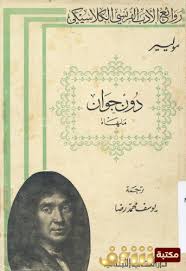
One spring day, Don Juan lands in the garden of a cook who runs a restaurant near the ruins of a French monastery. A friendship is established between the two, and the adventurous traveler tells his friend on dark evenings his stories with women, each of whom is of indescribable beauty.
There are literary characters who are born and do not die. Over the years, these characters witness multiple births, each time taking on a different form and a new dimension. Among these characters is Don Juan, to whom Peter Handke returns in this novel, to raise many questions, and to present his reflections on love, the spirituality of love, and the passage of time, destroying the common image of his hero, presenting a new one. Claiming that all previous Don Juan characters were fake, and that "Don Juan" is the real and honest one.
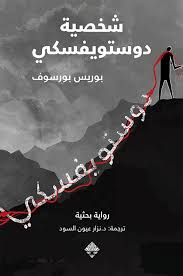
In everything Dostoyevsky wrote, he was writing about his spiritual research and exploration, and looking for solutions to the issues that worried him, but which would not be solved, as he himself clearly realized. And all of his heroes, including those who differ greatly from him in terms of his moral formation, struggle with the issues that Dostoyevsky himself wrestled with throughout his life. He is the spiritual father of all his main heroes, meaning that he represented a model for them. There is not a single person, among those whom he created and created, who did not copy him from himself, even if in a different way.
The life of a great personality becomes intelligible to us to the extent that we are able to delve into it, with one look, in the full diversity of its characteristics, which are often contradictory, but stemming from a single root. If we are not able to accomplish this, then in one way or another, in one way or another; We will simplify and impoverish this great personality.
If a biography of Dostoevsky's life was written without considering his novels, it would be worth nothing, and it would be impossible to restore the formation of his personality without his works. Dostoyevsky's realistic, experimental biography for understanding his novels is no less important than his novels themselves for understanding his personality. On the pages of Dostoevsky's novels, all of humanity's history, thought, and culture are revived, reflected in individual consciousness.
In order to understand the true importance of Dostoyevsky, which he has acquired in our time, a frank conversation is necessary.
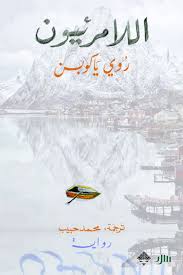
Ingrid Barøy was born on a small island off the northwestern coast of Norway, an island inhabited by only one family, living out their ambitions and dreams that collide with the boundaries of the land and the weather, and the mercy of the sea, which provides a living, but also brings death.
Father Hans dreams of building a pier connecting them to the mainland, but contact with the outside world comes at a price, which Ingrid will know fully after she grows up and goes to work there for a wealthy family and take care of her two children. With the couple disappearing one day, she finds no choice but to return to her home with the two children, and thus the island’s population increases in number, and a different life begins, especially as Norway awakens to a wider world, a modern world that is volatile and can be cruel.
“The Invisibles” is a profound interrogation of freedom and destiny, written with delicate narration and brief, simple, calm sentences tinged with poetic tensions, creating a painting of natural cinema that makes the “invisible” clearly visible.
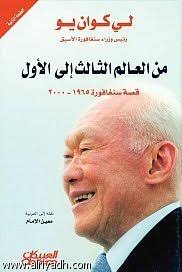
لم يتوقع سوى قلة قليلة من المراقبين أن تمتلك سنغافورة الصغيرة فرصة كبيرة بالبقاء، حين منحت استقلالها عام 1965م. فكيف - إذن- أصبحت المحطة التجارية النائية ...










-1718246765.jpeg)