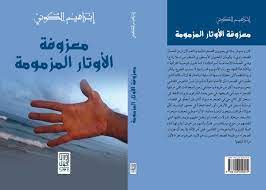
“History pushes us to questions about its course, which we answer sometimes, and many times confusion remains a prisoner of souls and chance, until awakening comes to strike our consciences through one of those honest creations that refresh memory, such as the letter that Fernando Arrabal addressed in 1971 to General Francisco Franco (President of Spain 1939- 1975) to argue with him about the great Spanish Civil War - as some Spaniards described it - and then about the regime imposed by the general after the war. It is a cry for freedom and a spontaneous testimony from within the fence that shackled Spain in the furnace of war, turmoil, and dictatorship. The message was spread without interruption in France, Spain, and Argentina in
Many publications, the last of which was published in 2011. Sincere satire, pain and heartbreak over a lost homeland, eternal exile, in addition to the life of the writer Fernando Arrabal, which is full of creative productions in theatre, cinema, literature, poetry, chess, etc. All of this makes this book a journey to learn - perhaps - about... “The Condition of Spain in the Age of Grievous Mourning.”
Khairy Al-Hallaq is a dangerous criminal sentenced to death. He spends the remainder of his life in prison waiting for the moment of execution of the sentence, and hides from everyone the secret that prompted him to commit his crime. A secret that might lighten his sentence, or save his life. When he enters the political prisoner ward, the criminal changes his convictions and reconsiders his life, thus dying a different person.
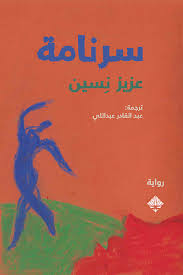
This “sermon” delves into the Turkish community of killers and criminals, to depict the prisoners’ diaries and their struggles in the cells, but it also carries a political and humanitarian dimension by criticizing the death penalty, and the societies’ attempt to purify themselves by choosing a scapegoat on whom to comment their crimes and corruption, and celebrate the joy of ending his life.
The sernama is usually a book that accurately describes a specific type of public celebration, but the sernama of Aziz Nessin conveys the facts and details of the execution of a “criminal” who lost his right to change.