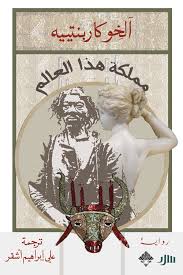
After Macendall escapes and is pursued, he takes advantage of the strange abilities with which he has been endowed, taking on the appearance of different animals, taking advantage of his talent to move instantly from one place to another, and because of the belief of his contemporaries in him, he encourages with this magic the most dramatic and strange uprisings in history.
A complete mythology remains of Macendal, accompanied by magical chants that are memorized by all the people, and are still sung in Voodoo ceremonies. In this novel, Alejo Carpentier draws inspiration from this mythology from a series of extremely strange events that occurred in Haiti, in a specific era that does not extend to a short human life, and he presents them through the character of “T. Noel,” who finally realizes how a person can find his greatness and his maximum extent. In the kingdom of this world.
Since her childhood, Yusra Mardini’s dream was to become a professional swimmer and represent Syria in Olympic sports tournaments, but the intensification of the battles in Damascus in 2015 reduced her dream to just survival. Like tens of thousands of Syrians dreaming of living in peace, Yusra set off with her sister Sarah, and some of their relatives, on the terrible asylum journey to Europe, carrying with them their dreams of a safe life and resuming professional swimming, but in the middle of the trip between Turkey and Greece, the rubber boat’s engine stopped working. Work, and the boat loaded with passengers began to sink, and despite their many attempts to call for help, no one responded to them. Seventeen-year-old Yusra, her sister, and some other passengers jumped off the boat. To lose weight, they swam with it until they reached Greece, after which the sisters continued their dangerous journey overland to Germany. From swimming to save her life and the lives of her friends, to swimming with a dream of an Olympic medal, Yusra tells her extraordinary story from a refugee fleeing a war-torn country to an Olympian in the 2016 Summer Olympics in Brazil. ***** Yousra, we could not be more proud of you for your courage, your ability to resist difficulties, and for the wonderful example you set for children everywhere. Former US President Barack Obama
رواية حقيقة الخديعة – دان براون. كعادة دان بروان يكشف لنا مزيد من الأسرار التى لا يعلمها الكثير منا يكشف دان في هذه الرواية عن مدى… سلاسل وأعمال كاملة.