About the book
(Features of the heart):
In this book, I convey my thoughts, feelings, and personal experiences in a way that is somewhat vague or explicit at times.
I express this in short, not lengthy lines so that the meanings are conveyed quickly and enjoyable to the reader.
I use imaginative images to express, and sometimes I convey the truth of reality from experiences with full disclosure.
My humble writings are a personal effort and the result of two years or perhaps more, as I found encouragement to publish from a number of writers who read some of what I wrote.
I hope that my dream will come true through you, and I hope you can let me know your opinion about my humble writings, and I welcome your comments
Please accept my thanks and gratitude
my regards ,
Samira Khalifa
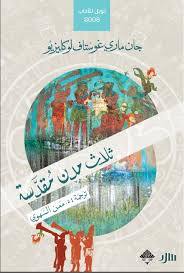
"Chanca", "Texcacal", and "Chon Bum" are three cities in the Mexican Yucatan Peninsula that enjoyed great religious importance during the class war waged by the Mayas against the Spanish colonizers. The religious importance of these cities is due to their being centers of the phenomenon of speaking crosses.
In this wonderful book, the French writer (who won the Nobel Prize in Literature in 2008) tells, with great poetry, about his observations in these towns, in a captivating style. The trees, the water, the wind, the forests, the sky, and the earth, all of them become humanized in Le Clezio’s writing, as He has a unique ability to transform nature and its elements into vibrant, sensual things.







-1724842436.jfif)