Voices
An electronic platform that launches from the Emirates to the world with an Arab vision, national visions, and a clear strategy derived from conscious, solid, solid thought, and promising steps led by pens with mature, sparkling white fingertips.

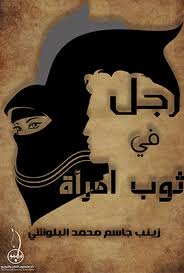
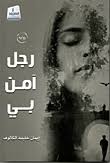
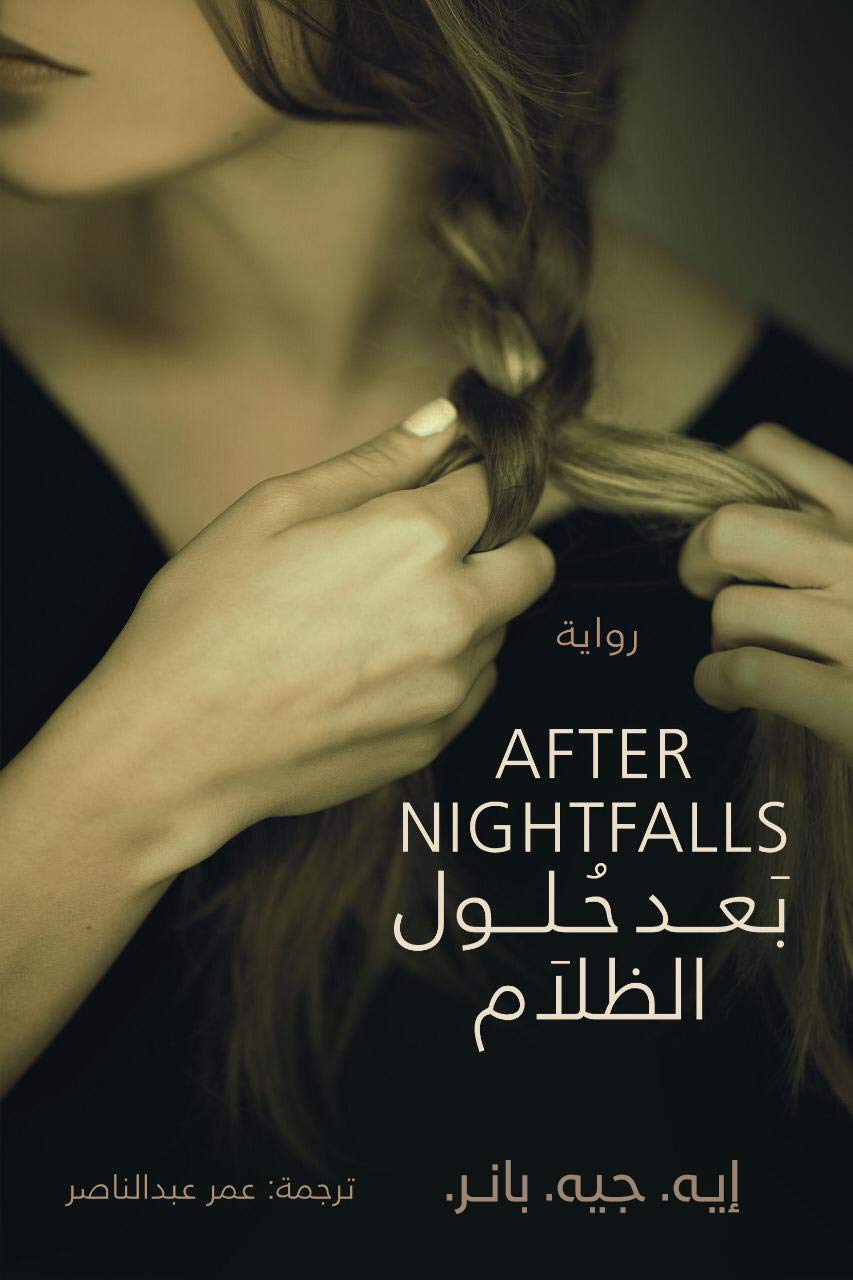
A girl enters a nunnery with a box and a wedding dress. A woman follows a homeless woman wearing a green dress through the streets of the city. A third woman’s life changes after visiting her husband’s family cemetery, and she keeps searching for herself, for a “place.” And a fourth woman is lost in a world of gray, brown, and purple faces, above which a tree floats. She survives, and a fifth woman visits Istanbul with her husband and stays in the same hotel where Agatha Christie once stayed, and the lives of the two intersect in a mysterious way.
These five women are the heroines of Cristina Fernandez Cubas, who narrates a special magic that overwhelms us, seduces us, arouses our anger, and fills us with images, feelings, descriptions, and fantasies, before which we cannot be astonished, by the ability of her writer, to create a dreamy atmosphere in a unique literary style.
About the book
The book is divided into six chapters. The first chapter talks about the religious reform movement in Europe and the emergence of the United States of America and its role in serving Zionism in Palestine and transferring its project from the settlement stage to the state stage. It examines the roots of the relationship between America and Israel and the religious dimension, which is the basis of the strength and durability of American relations. Israeli
In the second chapter, the book talks about the October War - the year 1973 AD - which ended with the victory of the Arabs (and the destruction of the myth of the invincible Israeli army) constituted a turning point that transferred the Arab-Israeli conflict into a third world war, and made the Arab-Israeli conflict turn into a conflict of existence that is not For Israel and even the existence of the entire Arab nation, it also opened the door to reviving old ideas calling for the division and fragmentation of the Arab region, and opened the appetite of writers and thinkers to compete to present visions on this matter, such as Bernard Lewis.
The third chapter examines changing the position of the Arab/Israeli conflict from a priority to a secondary conflict, by working on the multiplicity of conflicts in the region and playing the sectarian card, which led to the disappearance of the Arab/Israeli conflict, which was on the hierarchy of priorities, among the winds of new conflicts in the region.
The fourth chapter of the book is the real beginning of transferring the ideas and plans aimed at fragmenting the region, which were formulated and officially approved after the October War, to the stage of implementation on the ground. The beginning - in the year 2003 AD - was with the aggression against Iraq, which came at times under the pretext of weapons of mass destruction, a lie formulated by the United States. Sometimes under the pretext of spreading democracy
The fifth chapter of the book talks about the soft power that the United States sought to employ to complete the plan to fragment the Arab region, which was known as the Arab Spring revolutions, which are a reproduction of the model of the colored revolutions in Central Asia. This chapter examines the relationship between the United States and the Muslim Brotherhood, and it was limited to Egypt and Syria. Because of the strategic position that these two countries enjoy in the Arab system,
Chapter Six of the book touched on ISIS and the roots of the relationship between the United States and extremist fundamentalism, the impact of the Arab Spring phase on the recovery of this organization, which is an extension of Al-Qaeda, and how the United States found in ISIS what it needed to complete the plan of creative chaos after the fall of the political Islam groups that came to power during the Arab Spring phase.
Joan Tatar's memory falters on scenes that Syrians experienced in the laboratory of their torment. It is the slow Syrian time that brings and brings with it in Tatar’s diary the various elements of the experience: starting from the market, to the soldier, to being discharged from it, in a biography that contradicts time, from symbolic death to symbolic birth, in a country that resembles a long dormitory crowded with people. Throughout this cycle of Syrian life, murmurs and stinks are present. Life, as Joan Teter portrays it in this book, is an experiment with low sounds that end in final silence. An experiment with the depths of fear. Is it deeper than we imagined? Is it possible to escape from the fear that has become part of water, and from thirst, part of glut, and part of hunger? Many opposites meet on that distant horizon that made the Syrian dough in the soldier’s laboratory. Were they prisoners or soldiers? Are they condemned or heroes? Everything is equal, all values are equal in that horizon which is the space of Syria, the space of fear and pleas for freedom.
About the book
(It is not the end...there is another life)
This book aims to make the employee aware of the stages of life that he will inevitably go through and the extent of the changes that may occur from one stage to another. Talking about the stage that precedes the retirement stage, the spotlight also focuses on the stage in which his professional life ends, meaning (the retirement stage) and what comes after it, which is considered one of the most important stages because it is the last and there is no other stage.
The book also contains within it the most important problems and difficulties that an employee may face in his work and how to deal with them without fanaticism and impulsiveness.
The topic of retirement is discussed transparently and clearly to show the reader what it is and what changes may occur to the retiree in various aspects (material - social - psychological...). What is the correct way to cope with the decision to retire?