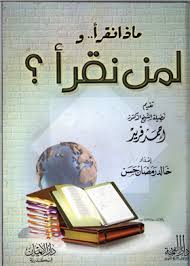
Was it still possible to add anything about Al-Mutanabbi, who filled the world and preoccupied the people, throughout these centuries that extended from his birth until now?!.. And did there remain a side of him that had not been studied, examined, and examined in more than one way, nor was it subject to discussion and debate among the fans of this great poet? And between his critics and haters?!..
Al-Mutanabbi is a unique figure in our literary heritage. His lovers, readers, and memorizers of his poetry are more numerous than those who can be counted, and it is too dangerous to clash with them without prior preparation and readiness. They have extensive knowledge of his poetry and many of the stages and details of his life. Their zeal in defending or attacking it is immeasurable. Therefore, the prior image is more binding. The imagined picture of him that they drew for him is too attached to the imagination to be discussed. Its relationship with national identity is more rooted and dangerous. This is what makes attacking him, for many, an attack on one of the nation’s “values and symbols.”
But I am writing about Al-Mutanabbi after I spent two full years reading him, analyzing his poetry, and studying the details of his life in order to write a television series about him. Dramatic writing requires its author to penetrate as much as he can into the souls of his heroes in order to understand them, to imagine them in the situations in which humans might be, and to draw their reactions, with dramatic logic, as human reactions might be. All of this is within the framework of documented historical information.
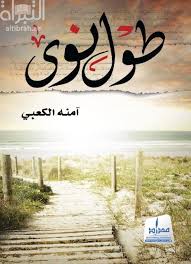
Tall Nawi
Book summary
Hearts need consolation, perhaps they will be comforted by the wound of the relative who owned them. When the pleasure of the liver rebels, and souls lack their complement, expressive words die and memory disappears, searching for no other refuge. The book includes thoughts that tell clips of stories overcome by sadness and pain, dealing with hearts that were shattered and in need of consolation and advice. .... Each thought describes a section of not-so-short stories, in which it tells the conversation of the soul to the soul, and narrates mixed happiness and pain, broken hearts, and inner discourses, which arouse controversy in the soul, and require healing answers for the tormented soul..... The characters speak with the language of the days, complaining. Bitterness befell her, and she taught a life lesson: there is no permanent happiness, no love lasts, and no trust is given to the unknown.
Long hours are the most miserable and exhausting of the souls of many. That distance that intensifies longing and steals sleep from the eyes. It is the distance that everyone abhors and only the hardened of hearts can enjoy.
It is said: “Writing theater is, in a way, knowing how to tell our story.” But the past ten years have undermined the axioms. Instead of asking how, we began to ask: Why do we talk, and about what? Thus, these four texts come today to answer these questions in their own way, and carry the concerns of their writers “here and now.”
A text depicting the city as he sees it: two elderly people guarding public toilets on a street in Damascus; Where stories seep out from under dirty bathroom doors, another about a young man who spends most of his time in the kitchen, unable to work and interact with others, and instead tries in vain to stop the water dripping from the tap so as not to drown him, and a third text about a faltering relationship between a Syrian young man residing inside... A Syrian woman residing in Germany. As the two try to maintain the connection that unites them in the face of the difficult circumstances of their lives, a final text sheds light on the mentality that prevails among Syrian artists in “Despora,” and affects their work mechanisms and their relationship with cultural institutions, by shedding light on the rehearsals of a theater group preparing for the play “The Return of Danton.” With projections on the Syrian situation.
Taken together, the texts of this workshop form an image that resembles its spaces with the questions of these spaces, or with the absence of questions, with the blurring or dominance of memory, with confusion, with boldness, with violence, and with death. Stage masters.
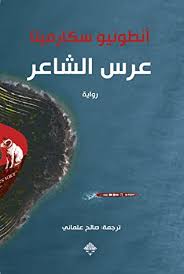
After the death of his father, Geronimo Frank, the scion of a wealthy Austrian banking family, decides to break from his family's traditions and move to live on a small island in the Adriatic Islands, and to reopen the large store there. Despite the tragic legend associated with the marriage of the previous store owner, which befell the new owner, He succeeds in preparing for marriage to the most beautiful girl on the island, Alia Aymar.
During the preparation for this legendary wedding, Rino Kubita, the young revolutionary and son of the island's popular hero, becomes aware of the existence of arrangements for an Austrian invasion of this island, so he organizes a resistance squad to kill the invading soldiers.
Between the preparations for the wedding of the century, as described by the islanders, and the fluctuating feelings of Alia Emar, who loves music, and the anticipation of some of the islanders for the retaliatory invasion of the dead soldiers, Scarmita narrates in his charming and sarcastic style about the preparation of an entire continent for world war, and about a strange asylum journey to the safe paradise, Chile.
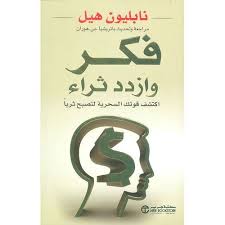
في “فكر وازدد ثراء”، يشدد نابليون هيل على أهمية التخطيط المنظم كأحد العناصر الحيوية للنجاح والثراء. يعتقد هيل أن القيام بخطة عملية ومتوازنة لتحقيق الأهداف الخاصة بك ليس فقط مفيدًا، بل أيضًا ضروريًا. تتطلب عملية التخطيط المنظم تحديد الأهداف بوضوح، ثم وضع خطة مفصلة توضح كيفية تحقيق هذه الأهداف.