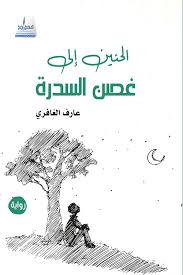
Longing for the Sidra branch:
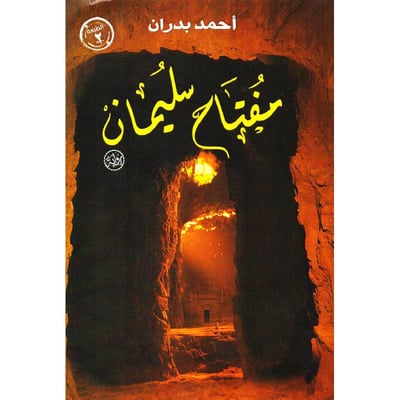
The novel was woven from the writer’s imagination and its characters are not real. It was built on real places and historical events that occurred for our Arab nation in the sixties. The novel begins when the protagonist, “Tarish,” is accused of killing his cousin, and after that he flees and leaves his village and homeland that he loved for an unknown destination, and settles in He worked in the city of Dubai and lived through the period of the rise of Arab nationalism and its victories. After that, he joined the regular school to complete his education, until he met members of a resistance movement to colonialism. He embraced revolutionary thought and engaged with them in combat operations, until he was chosen to travel and join one of the Liberation Front camps soon. From the Mahri Sultanate, but God’s will wanted him to retreat and return to the soil of the homeland, to the village, and to its people.
About the book
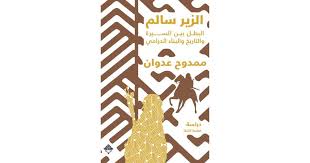
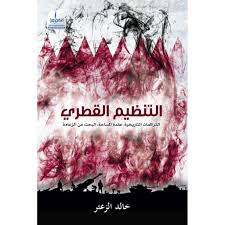
The book talks, at the beginning, about the roots of the establishment of the Emirate of Qatar since it was subordinate to the Bani Khalid who ruled Al-Ahsa, and after him, Sheikh Muhammad Al Khalifa’s settlement in Al-Zubara and its fortification, before the conquest of Bahrain, and Qatar’s continued subordination to Bahrain, and the process of the British separation of Qatar from Bahraini rule, and so on. This was followed by the stages of dependency that Qatar entered into, from dependency to Saudi Arabia and entering under Ottoman and then British rule, and it talks about the Al Thani family, the roots of their presence in Qatar, and the role of the Al Thani in collecting zakat and delivering it to the ruler of Bahrain,,
The book talks about Qatari independence from Britain, the coup process that became an alternative to the process of peaceful transfer of power, the political mentality of Qatar’s rulers affected by historical accumulations and the complex of geographical space, and the personality of Hamad bin Khalifa, who is governed by the psychological complex of his emirate’s position on the regional and international political map. And about his efforts to search for regional leadership, the goal of establishing Al Jazeera and establishing the American base, and the failure of Hamad bin Khalifa’s efforts to expand the geographical map of his emirate,,
The book also talks about the relationship between the Qatari regime and the Qatari people, and the regime’s efforts to change the demographic composition in Qatar, and the policy of replacing one people with another, and turning the Qatari people into a minority. The book moves on to the relationship of the Qatari regime with its Gulf and Arab surroundings, and then Doha’s regional and international relations, and the attempts Hamad bin Khalifa in limiting the Saudi and Egyptian role and trying to build a regional role for Doha, relying on financial diplomacy,,
The book also talks about the beginning of the roots of the relationship between Qatar and terrorist organizations (Al-Qaeda and after it the Brotherhood), and about the role of Qatar, Al Jazeera, and the Brotherhood centers in the project of creative chaos and regime change, and about the role of Doha in creating terrorist organizations in Syria and Libya, and supporting terrorism in Egypt, and about the plans. The Qatari conspiracy against Saudi Arabia, Egypt, and Bahrain, and in conclusion, the book talks about the crises of 2014 and 2017, and about Doha’s scenarios in light of the quadrilateral boycott it is experiencing, and the dangers of bringing in Iranian and Turkish forces, against the Emirate of Qatar and the Qatari regime,,
Elegant and white rose:
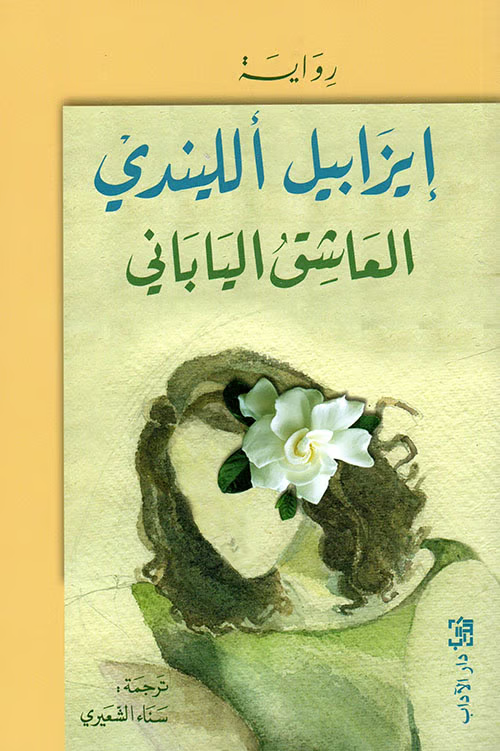
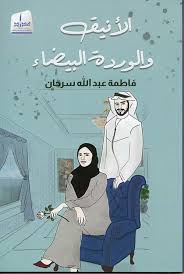
The book deals with the middle age stage, which is a very important stage in a person’s life, and even more important
It covers the longest and longest stages of life and was formulated as transit stations for some adventures and experiences
And the experiences that we all went through in the various stages of our lives...and every station we pass through
We will live with her situations that we experienced previously, but in a simple, dramatic way that invites us to dive in
Human self and we feel its value. I used my own experiences and the experiences of those around me
All ages and their life experiences. The book took on the character of an indirect novel
Problems of both men and women in middle age. It is the main goal of the book
It is how a person lives a happy life at different stages of his life.