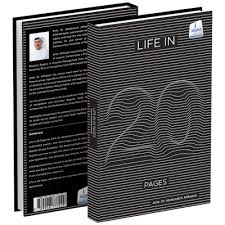
Life in 20 Pages by Amb. Dr. Abdulsalam AlMadani is a book that simplifies life, helps you understand people, and encourages you to have a positive attitude and high spirit despite all your hardships. The book highlights events and incidents in your daily life and teaches you how to deal with them with ease. It helps you solve your problems, achieve your aspirations, and articulate your dreams, no matter how impossible they seem.
Lifelong experiences are put in quotes to make it easy for people to understand life. The more you dig in, the more you realize that your biggest problems could have been solved if you changed your approach.
Life in 20 Pages will take you on a journey where you will feel lighter, happier, and more determined.
الرواية عميقة جدا ومتكاملة ، تشاهد فيها حياة شخص منذ طفولته براءته شغفه طموحه نجاحه زواجه حياة شبه متكاملة حتى يبلغ القمة لكن ما يمكث طويلا حتى يتأرجح منها
A guide to romantic relationships...
It is considered a reference for the success of romantic relationships between any couple... when you are in a romantic relationship. The relationship periodically suffers from anxiety, tension, or lack of success...but the good news is that this book will provide you with several effective tips that will lead you to a successful relationship. The tips relate to changing oneself first and how to improve personal qualities to attract love. It also provides advice on how to communicate correctly with the other party... and understand personalities in a positive and effective way. The book also looks at relationships from a different perspective and makes you more understanding and happy, and this is what is reflected in the relationship successfully.
It is a collection of articles including:
Your slumber and your jealousy are killing me. Your neglect and absence kill me. I am here between the magic of your fingertips before dawn opens his heart and eyes. Do you still remember my beloved, or have travels, the call of dawn, and beautiful women of chance stolen you? Am I still in you like a bird that happily pecked your palm and then flew away so that you would not see its hidden sadness? On this day, I woke up to the rose of my heart between your lips. I felt the lines of your face with a tremor of fear that I would ignite her fleeing life. I saw the pupils of your eyes only to read the distances, the textures, and the seas that you crossed with a closed heart, to land exactly where you were destined to amaze me before you stole me. I saw you at the threshold of fear telling me what was in your heart, before you withdrew: I fear that I will die and not be satisfied with the touch of silk in your soul, nor with the storms of a body that was stolen since the first resurrection, nor with the luminous language that childhood buried in her heart, and closed tightly for fear of getting lost and forgotten. I search for you without fear of me, and I do not know how a lover can be the victim of a dream that he stole while unaware of his grief