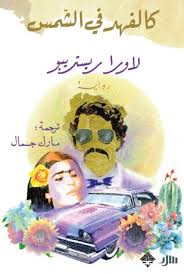
The fuse of war ignites between the Monsalbes and the Barragans, a fierce war governed by only one law: blood for blood. As the two families seek to accumulate wealth through illicit activities, love with its presence creates deeds, changes paths, and creates mountains of words that people pass on about the members of the two families until they are no longer what they are, but rather what people tell and imagine. Thus begins the legend that became true from too much of it being passed on, or perhaps it is a true story that became a legend from too much of it being told.
With an interwoven narrative full of sensory details, drawing from the springs of magical realism, Laura Restrepo writes a novel that is brutal and sweet at the same time, an epic story about desire and betrayal, a myth about life and death crouching in the desert: “like a leopard in the sun.”
The events of the play in our hands take place in the sixties of the last century in London, during a period of great social changes. The theme of the play is the cultural and civilizational poverty and great frustration experienced by an entire generation of young people living on social aid.
In “Rescued,” Bond appears to enjoy exhausting our senses by torturing an infant - in a public park - whose mother had left him with his father. What is most horrific is that the alleged father joins his companions in practicing this violence against the infant, to the point of death, without a clear reason. But the critics who defended Bond - and they are few - realized that when he presents a scene like this, he presents it to condemn that political, social, moral and economic vacuum through what T. s. Eliot calls art the “objective equivalent.”
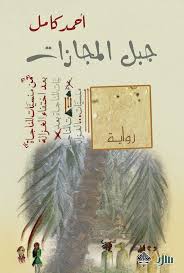
Endless hordes of palm trees roll horizontally, regularly and lightly, behind a small human body, heading towards the village of “Al-Ghazala” to destroy it completely. While the residents of the village and its people live the horror of the last moments, awaiting their inevitable fate drawn by someone seeking revenge, there are pasts that unfold, events that appear, and stories that are reproduced to tell the story of two imaginary villages.
In a strange atmosphere, and the strangest relationships between the characters of his novel, “Ahmed Kamel” grapples with the idea of human helplessness, and delves into the worlds of secret desires, which people do not dare to announce or reveal.
“Mountain of Metaphors” is a novel that takes inspiration from the proverbs of villages in the Egyptian countryside, the beliefs of its people, and their fairy tales, to build its own myth.