"Your Life" is a motivational text that embraces the reader with a language close to the heart, written in the style of daily reflections or a friendly conversation in a gathering of warmth and affection. It does not introduce you to yourself through a traditional approach, but rather in an honest way, as if the author were sitting beside you, gently whispering: Live your experience with passion, for you deserve the best."
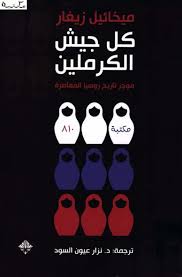
The Whole Kremlin Army: A Brief History of Contemporary Russia
65 AED
115 AED
0 Reviews2 sold
Product Details :
It is common knowledge in Russia that all decisions are made by one person: Vladimir Putin. This is partly true. In fact, all decisions are made by Putin. But Putin is not one person. It is a great collective mind. Dozens, even hundreds of people guess every day what decisions Putin should make. Vladimir Putin himself is guessing all the time about what decisions he must make in order to be popular, to be understood and to gain the support of “the great collective Vladimir Putin.” This is a very important myth: that everything in Russia is related to Putin, that without him everything would change and that the current image of Putin - the terrible Russian Tsar - was shaped for him, often without his participation: by courtiers, foreign partners, and journalists. This collective Vladimir Putin has been praising his memories all these years, in order to prove to himself that he is right. In order to convince himself that his actions were logical, that he had a plan and a strategy, and that he had not committed mistakes, but rather he was forced to act in this way, because he was struggling with enemies and fighting a harsh and continuous war. That's why my book is a history of an imagined war. A war that must not end, otherwise we would be forced to admit that it never existed. We have all invented a Putin character that we like. Most likely, it will not be the last character.
He entertains us and his people:
Nice interactions in the Emirati dialect..
In how many languages can I say I love you? How do I describe a successful person? Describe the best party you have ever attended. The compliment that I will never forget is... Can you tell Wade about a person by his appearance?
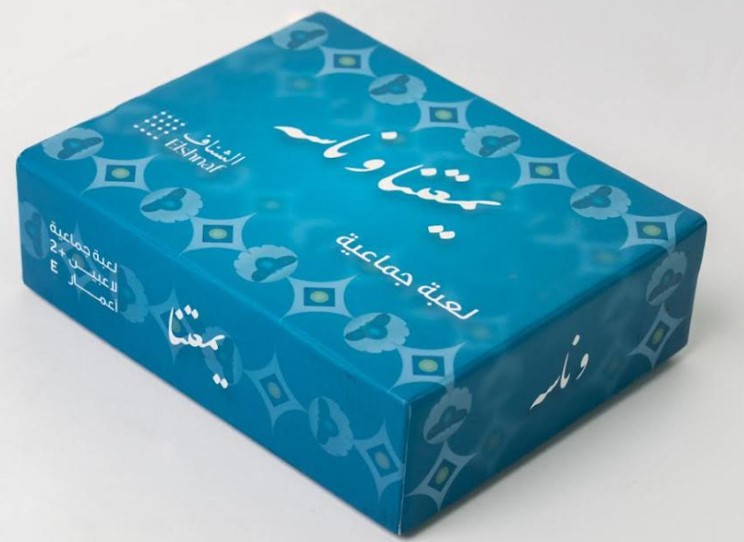
Think you already know a lot about yourself and others? Yamatna wa Nasa is a game that will help you discover things you don't know about yourself and others. The game is suitable for all ages. Minimum of 2 players.
Whether you're playing with a friend, spouse, or family member, Yamtna wa Nasa is a great starting point for not only great conversations, but it's also a fun way to use and practice the Emirati dialect.
The game contains 100 entertaining and thoughtful questions, all in the Emirati dialect that spark meaningful and interesting conversations - over a meal, in a majlis, at a party, at your next group gathering, or simply in the comfort of your own home.
It is suitable for playing during special occasions as well as informal gatherings.
Fragments and lush shadows...
The material consists of positive and optimistic messages that provide advice, a kind word, and an opportunity for change and self-examination
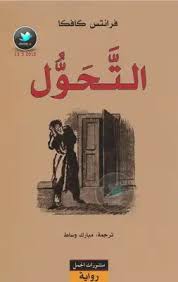
He was working in a sales company to support his family, which consisted of a father, mother, and sister. He worked to pay off his father’s debts that had burdened him. He is the “good son” as long as he performs his duty to the fullest extent, and any change in this is accompanied by anger, rejection, and neglect. In his workplace, which he found himself forced to live with, the state of domination and control by the chief of staff on the one hand is clearly evident, while on the other hand, it is matched by a state of subservience and submission on his part.
In fact, he has an unconscious desire to be fired from his job, but he fears for his family. From here arises a state of schizophrenia, as the two models of the cruel father and the boss represent the controlling authoritarian principle, and this is what arouses in him both submission and the spirit of rebellion.
He tried to follow the rules, to be a polite boy, to be rational as his boss described him at work... and between all these honest attempts, we find him completely losing himself, and he began to experience a surprising existential crisis!
Here he wakes up from his nightmares one day to find himself transformed into a disgusting “insect”!!
At first glance, he thought he was still dreaming, and amid the chaos and unreasonableness of the events, he needed conclusive evidence to confirm to him the veracity of the event, and this is what he got when he found his family shocked and terrified by the horror of the event. Then he realized the reality of the event and exclaimed, saying: “No, it is not a dream.” .












-1724841549.jpg)