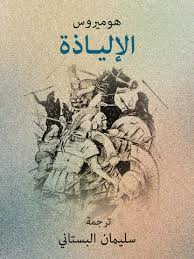
We must contemplate the secret of Homeric creativity in the epic narrative. So Homer does not care about telling only what happened in his epic “The Iliad,” but he is more interested in presenting the context of what happened and depicting the world in which this event occurred. We find events covering the universe from above Mount Olympus - the snowy sky - to the depths of the raging sea and the burning forests, and even the depths of the human soul itself in all its conditions, whether good or bad.
The events also cover gods, humans, the animal kingdom and birds. So we are dealing with a depiction of a universal existential situation, not a passing individual event. We are faced with an integrated system in which all the features and various components of living things and things interact, so that in the end we obtain a poetic exploration of the universe and its working system.

After trying my previous book, “In Defense of Insanity,” it occurred to me to do it again. The issue, in brief, is that I select from things that I have previously published in periodicals or introductions to books, what I consider to be valid beyond their time.
This book is not a continuation of the previous book, but rather a continuation of it.
It contains Lee's opinions on art, culture, journalism, women (and some politics). The question that confronted me in my first book confronts me now: What do these articles have in common?
The answer is as naive as I answered earlier: What unites these articles is that I wrote them.
The opinions here are my own, which may mean nothing to some of them, and may not mean anything to others. But it was important to me, myself, to say these opinions, and to record them, and among them was a farewell to figures like Assi Rahbani and Al-Dhahirah Rahbani, and even a farewell to a number of friends who had passed away, and who had passed through my life only briefly. Perhaps some bitterness still exists here as well. Upon reviewing the articles, I discovered that I was insisting once again on the losses that had befallen our lives. These are losses greater than military or political defeats. It is our constant humanitarian bleeding. And the one who gives us life...or makes us mad.
Joan Tatar's memory falters on scenes that Syrians experienced in the laboratory of their torment. It is the slow Syrian time that brings and brings with it in Tatar’s diary the various elements of the experience: starting from the market, to the soldier, to being discharged from it, in a biography that contradicts time, from symbolic death to symbolic birth, in a country that resembles a long dormitory crowded with people. Throughout this cycle of Syrian life, murmurs and stinks are present. Life, as Joan Teter portrays it in this book, is an experiment with low sounds that end in final silence. An experiment with the depths of fear. Is it deeper than we imagined? Is it possible to escape from the fear that has become part of water, and from thirst, part of glut, and part of hunger? Many opposites meet on that distant horizon that made the Syrian dough in the soldier’s laboratory. Were they prisoners or soldiers? Are they condemned or heroes? Everything is equal, all values are equal in that horizon which is the space of Syria, the space of fear and pleas for freedom.
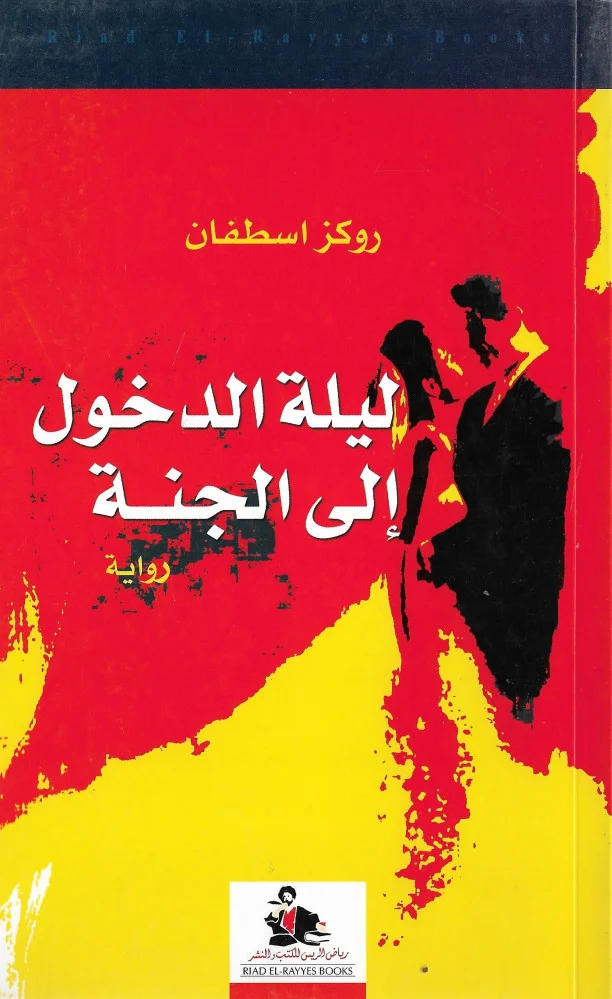
Moving between Zabaltani, Dawaila, Saydnaya, and all the way to Istanbul, Ahmed Aswad - a tailor on a sewing machine - tells the story of his life as it appears to him, a life full of transformations and first experiences: the beginning of falling in love, traveling, and planning a murder.
In a special language that may seem neutral, but it is sarcastic and full of emotion, Wassim Al-Sharqi explores forgotten corners of the lives of a marginalized segment of Syrians before 2011, such as: smugglers on the Lebanese border, or sewing factory workers, and patrons of bodybuilding clubs and bars in old Damascus.
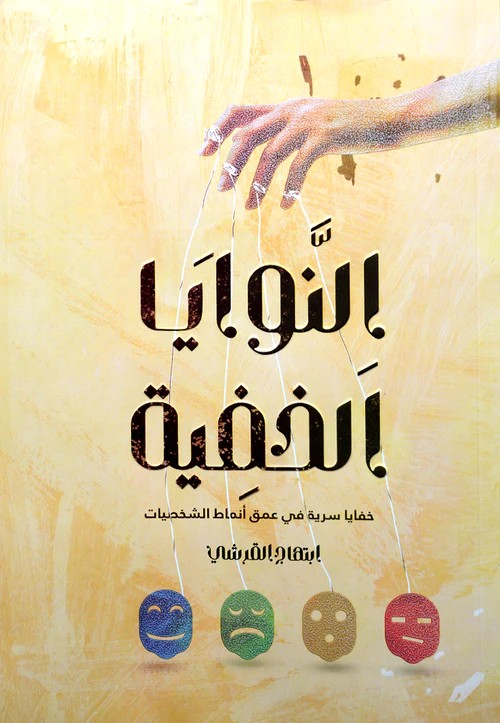
“Black” is a journey to delve into the motivations and drivers that direct people’s behavior and destinies, and an attempt to trace the source of the blackness that surrounds our lives and settles in our souls, difficult to disappear.
في هذا الكتاب تسلك الكاتبه آنا مارى شيمل طريقا شائكا يصعب على كثير من الكتاب الخوض فيه، وهو طريق الكتابة الروحانية أو الصوفية فى الإسلام فهو طريق مليء..
And love, since it was what Yemen suffered from, has not been found in the history of contemporary poetry More beautiful than these verses to begin my book Sahn al-Jin, a portion of the poem of the beautiful poet Ahmed al-Saqqaf, who passed away at the age of almost a century in his masterpiece Coasts of Glory, Coasts of Glory. This is a poem that highlights the importance of the Arabian Gulf and the Arabian Peninsula and the role of its people in defending and protecting themselves from The nation’s gains. Yemen is the flank of the Arabs, and the national strategic depth of the Arab Gulf states and the Arabian Peninsula from our Levant to our Yemen. Yemen is the common denominator for all the Arab Gulf states from a demographic standpoint. The tribes of Yemen are the tributary of all the tribes of the Arab Gulf states, as well as the countries of the Levant, so no city is devoid of In the Kingdom of Saudi Arabia, Kuwait, Qatar, Bahrain, Oman and the Emirates, there are tribes that return to their original Arab origin in Yemen. It is indeed the birthplace of the Arabs, and from it the Arab civilizations rose from before the ages until our modern era. Therefore, the importance of Yemen is not only in the strategy of the location overlooking the most important sea straits in the world, through which 21,000 giant marine vessels pass annually, which is equivalent to 57 ships daily, which means 7% of global trade and about 7% of global oil, so controlling and even securing the most important waterways in the world through which the world’s energy passes coming from its sources from oil fields in the Arab Gulf states is not an easy matter. It is an integrated relationship between this Arab country. And the Arab Gulf states, so the Gulf states and Yemen are two sides of the same coin, especially if the UAE succeeds, for example, in constructing a canal, even a recreational one, through its lands from the Emirate of Fujairah on the Gulf of Oman to the Arabian Gulf on the coast of Ras Al Khaimah. In this case, the Gulf states are with Yemen. It abolishes the control of Iran and the rogue ruling regime over the Strait of Hormuz. Rather, it abolishes the importance of this well-known strait. Certainly, what was mentioned above is very important and the focus of the world’s attention, as the strait is the Strait of Bab al-Mandab and is subject to Yemeni sovereignty, especially as well as the presence of Mayun Island in the middle of the distance separating Ras Minhali. On the Yemeni side and Ras Syan on the Djibouti side, which means that this island, Mayon Island, can overlook the north and south of the strait, thus controlling this strait and the important sea route, as we mentioned above. Most important of all is the human stock or the huge human resource. In this Arab Muslim country, there are approximately 27 million Yemeni Arab Muslims, of whom 65% belong to the same Shafi’i Sunni sect, and the rest are from the Zaidi sect, about 35%, which is the closest Shiite sect to the Sunnis, where agreement is on the most important principles, except for what is rare. I will not detract too much from matters. Religious matters are a special matter for its adherents, and Islam is a religion of coexistence in the first place, based on the Almighty’s saying: (You have your religion and I have mine). Human energy and Yemeni minds, especially in the Arabian Gulf diaspora, are more worthy of it than others. They are the basic engine of every society and the people of the country are the ones who sacrifice its glory and the people of the country. The country is the ones who create its glory and preserve its pride. If we contemplate here, we will find that this country has not been merciful to the forces of evil, whether its rebellious sons, such as the deposed, or the so-called Ansar Allah movement, the terrorist movement supported by Iran (the Houthis). The latter is notorious as the official sponsor of every terrorist movement in our Arab world, i.e. Iran, whether in the Levant or in the Levant. Iraq, Afghanistan or Yemen, and even the cultivation of some dead cells in the Gulf countries affiliated with Iran and Hezbollah affiliated with the Gulf. When these cells enter any Arab country, they do not remain or leave. As for the Arab Gulf countries, when they enter with their white hands into any Arab country, they restore the old and The Arab Gulf, with its six countries, has never neglected Yemen and its people, whether north or south, but it seems that the deposed Ali Abdullah Saleh has neglected many of his people, as well as of the countries of the Gulf Cooperation Council, and kept his people suppressed and suffering under his tyranny until he was deposed in 2012. At the hands of his people to choose who will represent them in the presidency of the republic, which is President Abd Rabbuh Mansour Hadi, through the proposal boxes. This is with regard to the relationship of the Gulf Cooperation Council countries with the Republic of Yemen, as for the relationship of the UAE with Yemen, in the discussion here is problematic.