تدور أحداث رواية «هيبتا»، وتعني رقم (7) في الحضارة الإغريقية، حول قصص عن الحب، موضِّحة مراحله السبع، حيثُ يدخل الأستاذ والمحاضر الجامعي أسامة حافظ إلى قاعة المحاضرات، وهو حاصل على ماجستير في علم النفس البشرية وسلوكياتها فيما يخص إيجاد شريك الحياة، ومختصٌّ أيضاً بالعلاقات الأسرية والزوجية، ويُخيّر طلابه بين أن يبدأ ...13/05/2023
Angel Santiago, the ambitious young dreamer, and Bergara Gray, the famous and experienced thief, benefit from a general presidential pardon and are released from prison on the same day.
Santiago seeks revenge for his past and the harsh prison experience, with a major theft that he hopes will build a new future for him, and he helps him carry it out after Gray hesitates, who only seeks to restore his previous life.
Their adventure intersects with Victoria, a school student who dreams of being a ballet dancer despite all the circumstances she suffers from.
In his award-winning novel, Planeta, Scarmetta tells a warm, emotional story about three people united by love, friendship, and hope for a better future, in a country still living in the shadows of a defunct dictatorship.
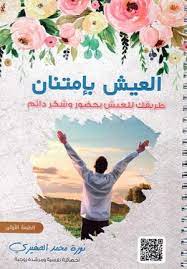
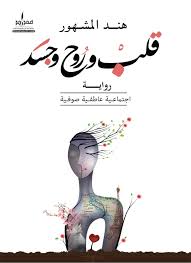
Book cover (back):
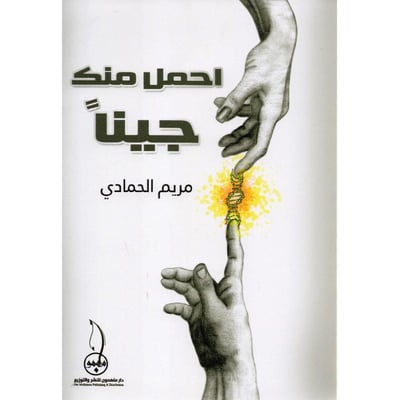
At your disposal are different messages from life for everyone who believed in himself, wished and pursued his dreams, made himself a different person, and despite the challenges and obstacles of life that he faced, he only insisted on achieving the best and did not create a title for the impossible. For everyone with good intentions, sow goodness. And leaving a good impact, and finally for everyone who has lived through the acceleration of life’s changes, and still maintains within him that good seed, and the good qualities that have not died over time. Yes, you are the only one who was born to be different, to leave a different mark, and to make change.
In her collection “The Lover of Nothing,” which is a renewed edition of her collection “My Heart is Half a Shining Moon,” Latifa Al-Hajj travels the reader once again to the places she visited in Turkey, the country that fascinated her from the first visit and in which she experienced different feelings. She writes to us from the air about a close meeting and an awaited dream, and in front of a running waterfall, she describes the joy of nature around her, and the joy that overwhelms her in its depths.
She describes sleep escaping from her eyes in the evening, and the sun yawning on the bed of the sky in the morning, about love and the moon, near which a blue butterfly resided, and in her easy, delicate language, she describes to us her longing, longing, and waiting for love and the beloved.
From the group's texts:
My heart is a bright half-moon / Poetry writes itself in my heart / Dervishes are not looking for relaxation / Your last selfie / Take me back to the child / To you I will fly / What joy / Greetings from the waterfall / Dark dreams / Far away as a star / Everything is beautiful, everything is happy / The soft criminal He sings in Yalova
The hero of the novel “The Philosopher’s Dance” is a controversial strategic thinker. He worked and still is an advisor to an Arab leader. He took up his job after leaving Palestine on the run after he was accused of dealing with the enemy during wartime, namely Hezbollah.
This thinker or philosopher practiced political dancing. He theorizes democracy and secularism while working for a non-democratic, non-secular leader who supports extremism. He also believes in Arab nationalism and does not recognize Palestinian nationalism. He engages in a sexual relationship with his Israeli colleague (Tzipora), then continues the matter and justifies his actions. He describes it as resistance. He claims his love for his wife, Layal, and at the same time he lives with a Moroccan woman of Jewish origin during his stay in Britain. This woman plays a major role in the novel as a visual artist and has the ability to listen and remain silent.
The philosopher moves to reside in Britain and discovers an attempt to assassinate him by a Druze soldier who was working in the Israeli army. Here the novel sheds light on the reality of the Druze, accusing them and trying to do justice to them at the same time. The credit for thwarting the assassination goes to a man from southern Lebanon who runs a restaurant in London.
The philosopher receives a letter from a deported Palestinian who took refuge in Lebanon, asking him at the end: How do you feel in your homeland? The message affects him greatly, and he searches for the answer whenever he has the opportunity, and there are many opportunities, but he fails to answer. The question forms a basic pillar of the novel as well.
Although the novel is realistic, it does not follow an ascending ladder of events, and what lies within it is much greater than the events mentioned. The novel, as much as it is a novel of events and actions, is an intellectual novel, and here lies the difficulty of talking about it.