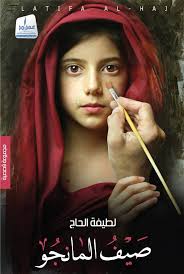
What happens when we die? Is there a second life after death? Why does everyone talk in their dying moments about a tunnel of light at the end?
Can insects read? What does a Tibetan monk do in a high school? Was Newton just a mathematician? How do we save the world?
And most important of all, does she reciprocate his admiration?
Many important questions that need to be answered, and who is more capable of doing that than a high school student who believes that he is the best musician in the world, and with a little help from his coffee-loving grandfather (even if he is dead... a little).
A brief overview of the novel Chronic Longing The novel centers around Salah, a character who is characterized by a captivating and different scent, and he has a strong attachment to his mother that reaches the stage of holiness in respect, love, and attachment. This appears in his conversation with her as he sits near her grave, which he returns to to celebrate her birthday, there, and distributes sweets to the graves in a surreal way. Symbolism. The first chapters talk about Salah, the adventurous and loving child who travels long kilometers to see a girl who lives on top of a mountain. He has not heard her talk or met her, but he loves her. He talks about his adventure with his friend Mustafa when they went to join the revolution to fight their enemy. She talks about Salah, who works at the newspaper and then leaves because he reaches retirement age. Najat, the director of personnel affairs at the newspaper, talks about this aspect, as does the security man who asks him to cooperate with him. Then the novel talks about Salah through the character of the cemetery guard, Fawzi, as well as through a woman named Salma. They both hear him talking to his dead mother, and then Amira, his childhood sweetheart, talks about him, who grows up, gets married, divorces, and meets him again. There is the character of Colonel Zahra, who summons him because of his attempts to transport his deceased mother and all the dead in the neighborhood to their homes due to being threatened. Salah organizes a reverse funeral that transports the dead from their graves to their homes, which is a symbolic funeral more than a real one, in order to preserve their memory as displaced people. It later becomes clear that Colonel Zahra is the same girl that Salah loved in high school. There is the character of Saber, who is the other side of Salah, who sometimes judges him and reveals some truths at other times. The novel restores consideration to man's relationship with his natural mother, his mother, the earth, and his mother, the cause, and raises the alarm of the disappearance of the memory of the displaced due to the practices of extremists who want to burn and plow the cemetery. Technically, the novel follows the short story approach, where each chapter constitutes a short story that the reader enjoys, but encourages him to continue reading.
So we don't forget Corona:
A detailed narrative narration about our lives that we were living peacefully in this world before the Corona crisis, and then suddenly the conditions of the entire world changed from one state to another, and they tended to make different commitments, which were previously rejected, and people were forced to accept them in their current time. This book talks about realistic stories of life and its forms and how we lived it and the whole world lived it at the time of the Corona crisis that struck the world in the year 2020 AD, and the year 2021 AD, which correspond to 1441 AH and 1442 of the Hijri year. All the details of that life, the injuries, people’s dealings with them, and how we watched and observed the positions of peoples, countries, and everyone during this period. It is a book that speaks to those who will come after us and describes to them what our situation was like during this period.
فيه نصوص أدبية شاعرية وجميلة نشرها الماغوط في كتبه ومسرحياته. ألوم على دور نشر الكتاب وضعهم عبارة "نصوصه الجديدة" في المقدمة . وهي في الحقيقة ليست جديدة لأن الكتاب أصلا نُشر بعد وفاة الماغوط رحمة الله ووسع مدخله.
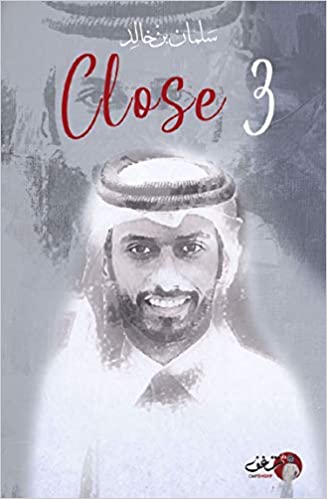
The book talks about Dubai... the city of dreams, the city of beauty and its founder, Sheikh: Mohammed bin Rashid Ali Maktoum, and we quote from it...
Tamer of life's riders, spoiler of horse cravings
With the wisdom of the desert, I enriched the lush horses and took care to name them until they appeared in time as a legend that walked on the lashes of sand with ease, and went slowly to ascend to glory with every effort. Under its spikes, the earth moved, and I was rewarded for its command, patience, secret, and effort. And you were the knight who was the appropriate guardian of the dreams of the wise and the pens of the nobles, and you, sir, were like your impeccable poem, taming the great horses and passing on longings for ages.