Black peacock:
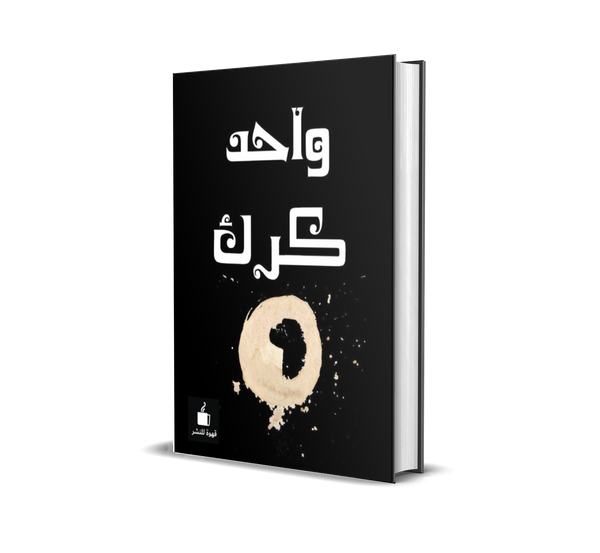
A novel centered around the methods used by political organizations, particularly ideology, to create their individuals who are assigned special roles and at planned times. The social and psychological conditions that the main character in the story goes through are exploited and employed skillfully by the organization to perform their roles efficiently in the future.
The black peacock is a very complex human condition. It appears within the text with different masks and at multiple stages of time. According to this condition, its owner is forced to wear masks that suit every stage of his life and are consistent with the role assigned to him within a long path that was mapped out in advance while he was still young. The novel presents its mysterious main character in two parallel narrative lines, once in the mirrors of others and again in an internal monologue of the same character as she struggles with death on the surface of the river.
The story begins with the story of the mysterious advisor Taj al-Din, one of the leaders of the Islamic movement and one of the mysterious influencers in government, and his strange, transforming personality, with many confusing masks, to delve into the details of a long period of modern Sudan’s life extending from the seventies of the last century, from the years of Nimeiry’s rule and extending To the beginning of the new century, filled with many events that changed the course of political events in the country.
The name of the novel is taken from an adjective given to its secret hero, Adam, when he was thirteen years old when he was serving his sentence in a juvenile facility for killing his mother, her husband, and their son. At this stage, the organization pays attention to Adam's personality and his tendency to violence, and is preparing for the years in which Islamists will rule the country. The novel presents the main character from two angles: as a perpetrator who trapped many victims, and as a victim who was deceived and fell into the trap of violence.
Adam is transformed by the game of masks into Ammar Al-Barakas, Shaker, Taj Al-Din, and many other names. Thanks to it, and thanks to his deep culture and exceptional abilities, he became one of the arms of violence that the authorities exploited to discipline their opponents during the third democracy period, which lasted between the years 1986-1989, and then used it in its multiple wars in South Sudan. And Darfur, which the alleged advisor himself admitted in his narration of his memories in a personal monologue during his struggle with death.
The novel begins with the scene of the enigmatic and enigmatic man (Taj al-Din) moving to the Burri neighborhood, located east of the capital, Khartoum, close to the shore of the Blue Nile, where he kept his distance from his neighbors until the moment his death was announced in the plane accident, without any reference to his name among the missing. The question mark over the man's fate haunted the imagination of his chance neighbor and former companion during his university days, Judge Al-Naim Darraj. He is provoked by the story of the man who wore different masks, so he travels the country in search of the turning point in the path of the mysterious man before he solves all the mysteries in the end.
A brief overview of the novel Chronic Longing The novel centers around Salah, a character who is characterized by a captivating and different scent, and he has a strong attachment to his mother that reaches the stage of holiness in respect, love, and attachment. This appears in his conversation with her as he sits near her grave, which he returns to to celebrate her birthday, there, and distributes sweets to the graves in a surreal way. Symbolism. The first chapters talk about Salah, the adventurous and loving child who travels long kilometers to see a girl who lives on top of a mountain. He has not heard her talk or met her, but he loves her. He talks about his adventure with his friend Mustafa when they went to join the revolution to fight their enemy. She talks about Salah, who works at the newspaper and then leaves because he reaches retirement age. Najat, the director of personnel affairs at the newspaper, talks about this aspect, as does the security man who asks him to cooperate with him. Then the novel talks about Salah through the character of the cemetery guard, Fawzi, as well as through a woman named Salma. They both hear him talking to his dead mother, and then Amira, his childhood sweetheart, talks about him, who grows up, gets married, divorces, and meets him again. There is the character of Colonel Zahra, who summons him because of his attempts to transport his deceased mother and all the dead in the neighborhood to their homes due to being threatened. Salah organizes a reverse funeral that transports the dead from their graves to their homes, which is a symbolic funeral more than a real one, in order to preserve their memory as displaced people. It later becomes clear that Colonel Zahra is the same girl that Salah loved in high school. There is the character of Saber, who is the other side of Salah, who sometimes judges him and reveals some truths at other times. The novel restores consideration to man's relationship with his natural mother, his mother, the earth, and his mother, the cause, and raises the alarm of the disappearance of the memory of the displaced due to the practices of extremists who want to burn and plow the cemetery. Technically, the novel follows the short story approach, where each chapter constitutes a short story that the reader enjoys, but encourages him to continue reading.
وتروي السلسلة مجموعة من القصص الواقعية على لسان طبيب نفسي يعمل في إحدى المستشفيات تتعلق بمرضاه المختلفة حالاتهم، لاسيما الفتيات منهم، ساردا أغرب الحكايات التي يبدو بعضها أقرب إلى الجنون من المنطق!
عقل كامل جديد: لماذا سيحكم المبدعون المستقبل هو كتاب لدانيال إتش بينك. يفترض الكتاب أن مستقبل العمل العالمي ينتمي للمبدعين. نشر الكتاب من طرف كتب رايفرهيد