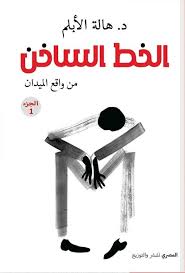
The Hotline book was one of the most realistic books that discussed the most common and widespread psychological problems among children and adolescents and family problems. In this book, Dr. Hala Al-Ablam provided advice by strengthening the positives and treating the negatives, and supporting her treatment plan with practical activities and training, which aimed to improve health. Psychological and help in strengthening psychological compatibility and effective social communication
An introduction to the story of "Alternate Planet"
The story “Alternate Planet” is science fiction, a special type of story that can be called “scientific literature” or “cognitive literature,” as it presents, through the course of its events, correct scientific information in the hope of making science popular with young readers and young people.
Although the story of the “alternative planet” currently seems to be pure science fiction, it is based on 100% correct scientific facts. It looks forward to the future and expects that fantasy to come true within the next hundred years, a fantasy such as the method of instantaneous remote transportation and structures whose hardness is tens of times greater than that of steel, even though their density does not exceed a tenth of the density of steel, which makes them light in weight and able to escape the Earth’s gravity despite their large size.
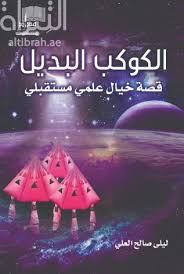
The astronauts sent by the Arab Space Sciences Organization to the planet “Nano” encounter strange creatures on the alternative planet “Nano” that they have never seen or heard of anything like! They did not know whether they were intelligent creatures? Is it peaceful or hostile? . . . But those who touched them found that their bodies were cold and soft, and their six limbs were also pink, cold and soft, and they showed a strange joy at meeting them. . . Their mouth extended into a small triangle in width, and the tip of this small triangle descended to touch its base. . . This is their smile of contentment. . . Creatures that leave you no room not to love them with all your heart. . . The relationship with these wonderful creatures developed into a dancing circle accompanied by beautiful childish singing of one syllable that was repeated joyfully and regularly. . “Becky, Ricky, Jicky, hum.” . “Becky, Ricky, Jicky, hum.” . “Becky, Ricky, Jicky, hum.”
In order to facilitate the transfer of knowledge to non-specialists and those wishing to obtain scientific knowledge, the story included short appendices to explain some scientific facts that the reader may need while reading the story, such as how we calculate the contraction of time when spacecraft move at a speed comparable to the speed of light and how we calculate the amount of distance traveled in a year. Optical light, the difference between digital computers and quantum computers, and the meaning of remote instantaneous transmission, or “teleportation” technology. It is a technology that will only be understood by those who have studied very advanced quantum physics. It will insert particles into a special device that contains software that uses “qubits,” instead of the digital bits used in electronic computers.
An introduction to the story of “Alternate Planet”
"Alternate Planet" is a science fiction story based on accurate and correct scientific facts and anticipates the future, expecting that fantasy to come true within the next hundred years. Astronauts sent by the Arab Space Sciences Organization to explore an alternative planet to Earth encounter beautiful and peaceful creatures, so they leave 3D printers and quantum computers on this planet for remote instantaneous transportation (teleportation) to carry out the task of transporting humans.
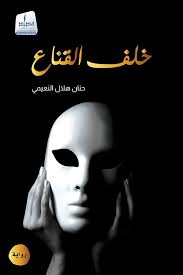
Behind the mask: A story with a thousand masks Don't be surprised by people's differences There are masks behind which many beautiful stories hide Once again, I am with you with a new story with a unique flavor to nourish your senses...