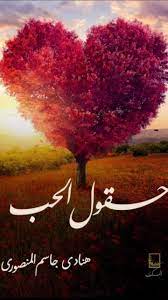
Happiness does not belong to one person and not another. It is not a value that is disputed or bought or sold. Rather, it is a reality that exists in some form, place, and time. Either you strive for it and obtain it, or you are against it, and in this case you must mortal.
A person may spend his life searching for happiness while he does not know that he possesses it. He searches for it far away, while it is near him. He may realize this after it is too late, and his condition says:
And I learned that when knowledge is of no use to a boy
What I lost was with me
Since those who hold psychological theories have given themselves permission to search for happiness, poetry has also given us permission to search for it. Poets are sensing stations of human beings, and they are more capable of understanding the essence and reality of happiness than others.
From here, the study paid attention to the poetic discourse of the most famous poets of Arabic literature during the various eras from pre-Islamic times until the present day, and studied and analyzed the poetic evidence related to happiness in their poems and how they reached and achieved it.
This study remains a prelude and key to broader future studies that include other literary genres such as the story, the novel, the story, and the biography, which enriches social and psychological research and studies that relate to human life and its nature and value. In the case of this study, he says:
I am happy if I exist
ينطوي هذا الكتاب، سهل التناول، على مفاتيح ثمينة تمكِّن القرَّاء من استكشاف حرٍّ لأكثر القضايا إلحاحاً في حياتهم. «واحد من أعظم مفكّري العصر». الدالاي لاما.
War has no female face (Nobel Prize for Literature 2015)
55 AED
105 AED
0 Reviews0 sold
Product Details :
Thousands of wars took place, short and long. We knew the details of some of them, while other details were absent among the bodies of the victims. Many wrote, but men always wrote about men. Everything we knew about war, we knew through “the man’s voice.” We are all prisoners of “men’s” perceptions and feelings about war, prisoners of “men’s” words. As for women, they have always been silent.
In World War II, approximately one million Soviet women participated in fighting on all fronts and in various tasks. Svetlana raises important questions about the role of women in the war: Why did women, who defended their land and took their place in an exclusive male world, not defend their history? Where are their words and where are their feelings? There is a whole hidden world. Their war remained unknown...
In her book, “War Has No Female Face,” Svetlana writes the history of this war. Women's war.