Much has been written about the heroism and exploits of war, and about the extent to which it is needed as a means of achieving goals that may be considered noble. But the constant question remains: Is there a justification for peace, our happiness, and even eternal harmony, if one small tear of an innocent child is shed for it?
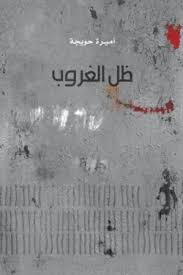
In World War II, more than one hundred million people were killed, wounded, and displaced in the bloodiest war - so far - in our human history. Much has been written about the tragedies and consequences of this dark phase of our history. But how did the last living witnesses see her? Children of this war?
More than thirty years after the end of that war, Svetlana, in her book The Last Witnesses, brings the remaining heroes of that stage back to their childhood that lived through the war, to tell in their words the last words... about a time that would end with them...
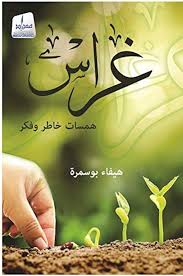
Grass.. A book containing a collection of articles and thoughts on various life, contemplative, and religious topics. Seeds planted in the hope that the reader will reap the fruits.
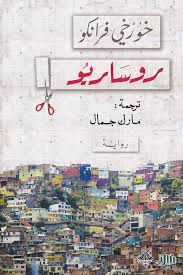
Rosario receives a bullet while she is receiving a kiss, this is how Jorge Franco begins his novel, and in those moments that Rosario spends suspended between love and death, the narrator tells us the story of a strange and mysterious love that he lived on one side with her, recalling with remarkable movements the past of “Rosario,” or rather what he was able to know from her past. She was the one who grew up in the city of Medellin, where there were weapons, crime, and poverty, and she used scissors as a tool to carry out all her crimes until they became close to her name.
In quick and intense flashes, the writer draws the features of an unpredictable, mysterious character who kills his victims in cold blood while imprinting the kiss of death on their lips. When he does this, he does not reveal everything, but rather provokes the reader’s imagination, inviting him to participate in completing the picture.
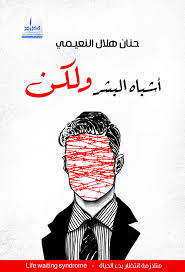
Hominins: The book talks about the reality we live in. Many of us are waiting for our lives to change through the efforts of other people. They live like humanoids and are under the illusion that their lives will not begin yet. This is usually inherent in waiting for life to begin. This syndrome is widely spread in our time.. A simplified and brief explanation of this syndrome. ...And also about perception, how a person perceives... Self-perception in the philosophy of the self is the experience of an individual’s personality or individuality... It should not be confused with awareness in terms of perceptible qualities, as awareness is awareness of one’s environment, body, and lifestyle in general... As for self-perception, it is Distinguishing this self-awareness...is how to consciously know and understand the individual's personality, his long-term thinking, his feelings, and his motivations for continuous progress and development...and the last part...are...short stories expressive of striving, patience, perseverance, and taking responsibility. ..
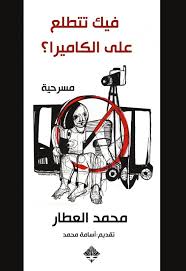
Are you filming a play that you can see with the camera? By the Syrian playwright Muhammad Al-Attar, the story of a director filming a film in which she records the testimonies and experiences of young people detained in prisons months after the outbreak of the Syrian revolution, and she suffers a conflict between her convictions and her belonging to a family close to the regime.
The novel tells the events and details of the period of Ottoman rule at the moment of its collapse. As well as the echoes of the dangerous transformation at the gates of World War I. The heroes are Jamal Pasha and his Jewish lover, Sarah, surrounded by tough men, spies, adventurous officers, and wandering soldiers seeking to push the Arabs, who live in the bitterness of nostalgia of the past, out of their land, their history, and their era.